Tuesday, December 16, 2025
The Truth Series: The Market College Football Built
College football recruiting has become a market. Money, transfers, and compressed decision windows have already changed how rosters are built and why the cost of being wrong is higher than ever.

UpNext
Author

What Trusted Data Has Already Changed in Recruiting
Roster decisions in college football now move real money, real expectations, and real careers.
That wasn’t true a decade ago. It isn’t theoretical now.
From the outside, recruiting still looks familiar. Film review. Calls. Visits. Relationships. The same rhythms, the same language. But inside programs, the weight of each decision has changed.
Not because coaches forgot how to evaluate talent.
Because the cost of being wrong has exploded.
That tension has been building quietly across the portal cycle, from The Calm Before the Portal to The Data Storm.
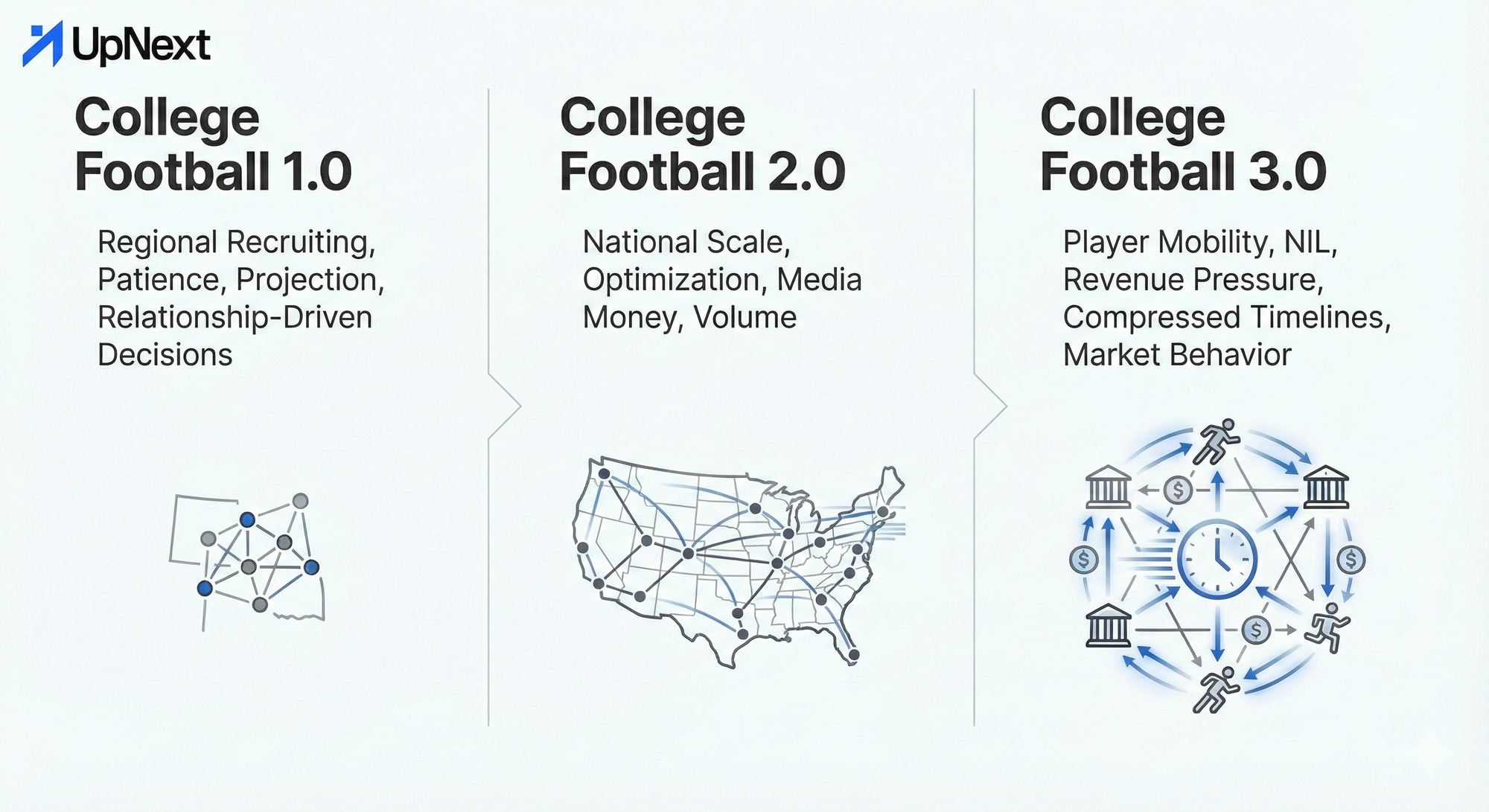
Somewhere along the way, college football crossed into something new. Not just NIL. Not just the transfer portal. A market defined by real money, real mobility, and real consequences.
Call it College Football 3.0.
From Recruiting to Risk Management
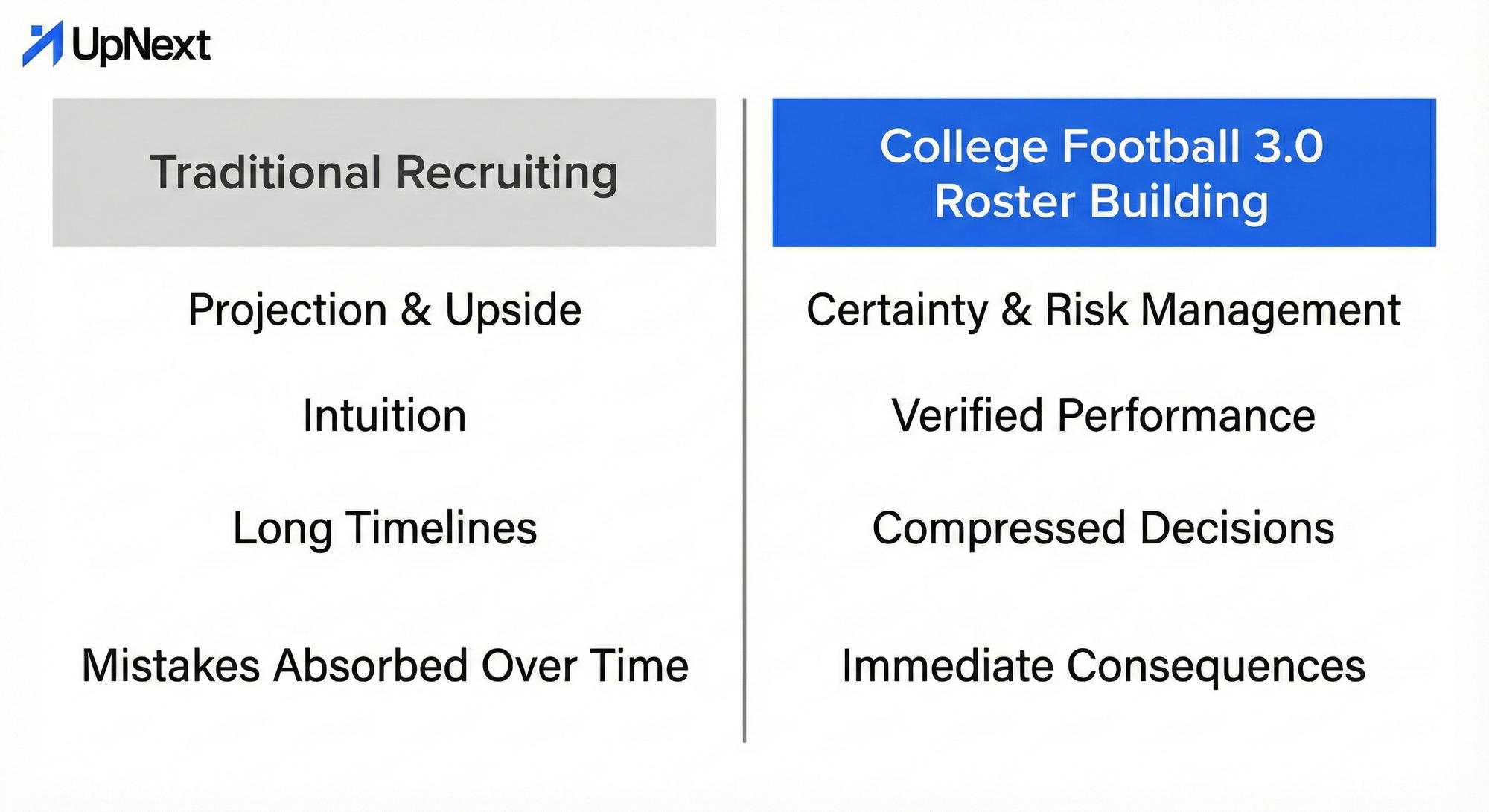
For decades, recruiting was an exercise in projection. High school athletes were evaluated on upside, traits, and development curves. Misses happened, but time absorbed the error. There was no salary. No instant exit. No secondary market.
That world no longer exists.
Today’s roster is built under financial pressure and eligibility constraints. Decisions are no longer about who might become great in three years. They’re about who can contribute now, what it costs to keep them, and what happens if they leave.
Roster spots have become assets.
Scholarships have become investments.
Retention has become as expensive as acquisition.
This is the structural shift that reframes everything we previously described as chaos, and why trust has become a competitive advantage.
Transfers Are Not High School Recruits
One of the clearest signs of College Football 3.0 is how transfers are evaluated.
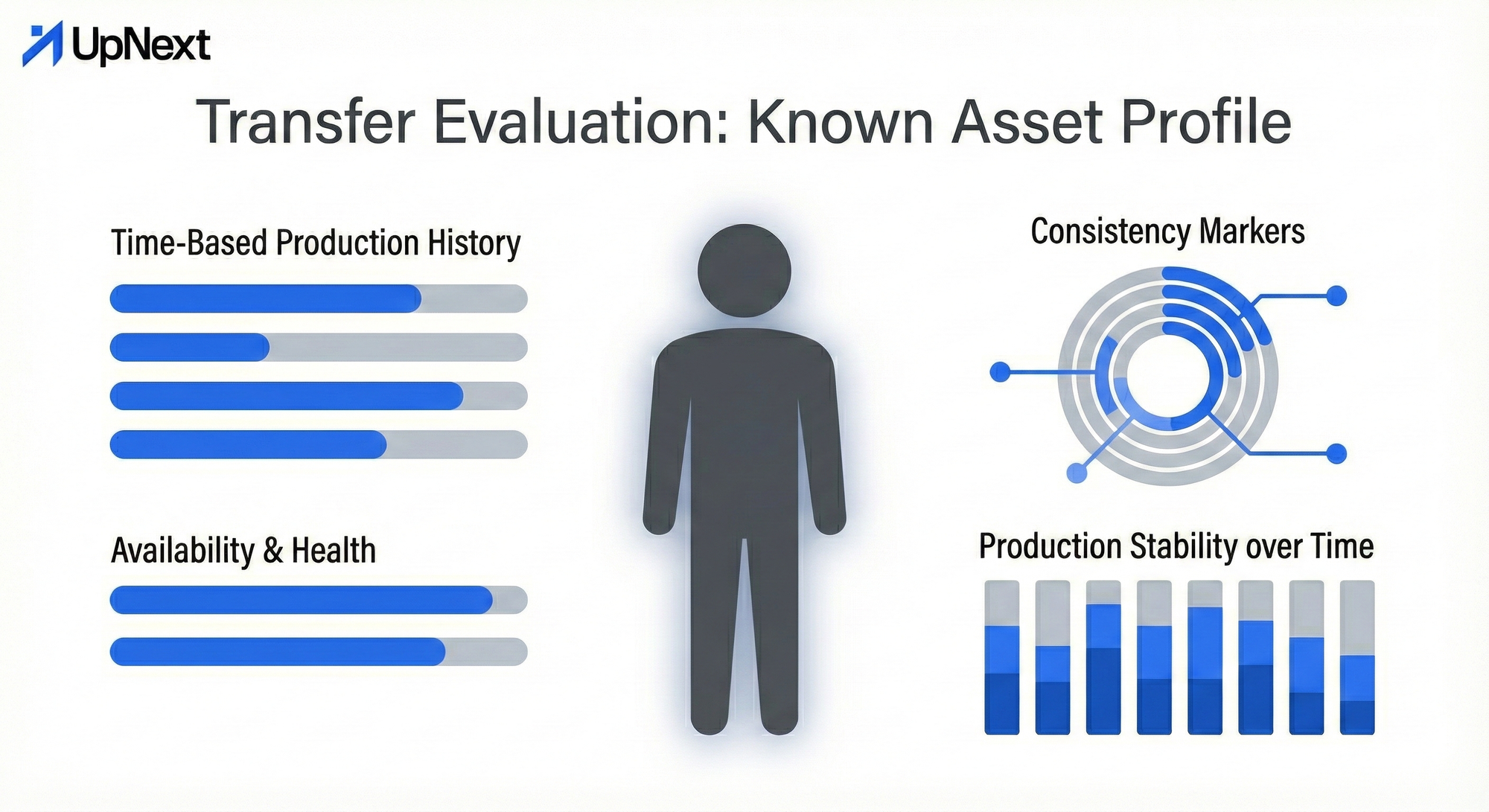
High school recruiting rewarded intuition and projection. Transfers are treated as known quantities. Their value is not theoretical. It’s observable.
Snap counts matter.
Production over time matters.
Injury history matters.
Role sustainability matters.
Film still plays a role, but it confirms rather than decides. Longitudinal performance data carries the weight. The question is no longer “what could this player become?” It’s “what are we actually buying?”
This shift toward verification over volume only works when the data is trusted, shared, and consistent across decision-makers.
Decision Windows Are Collapsing
The market doesn’t just move differently. It moves faster.
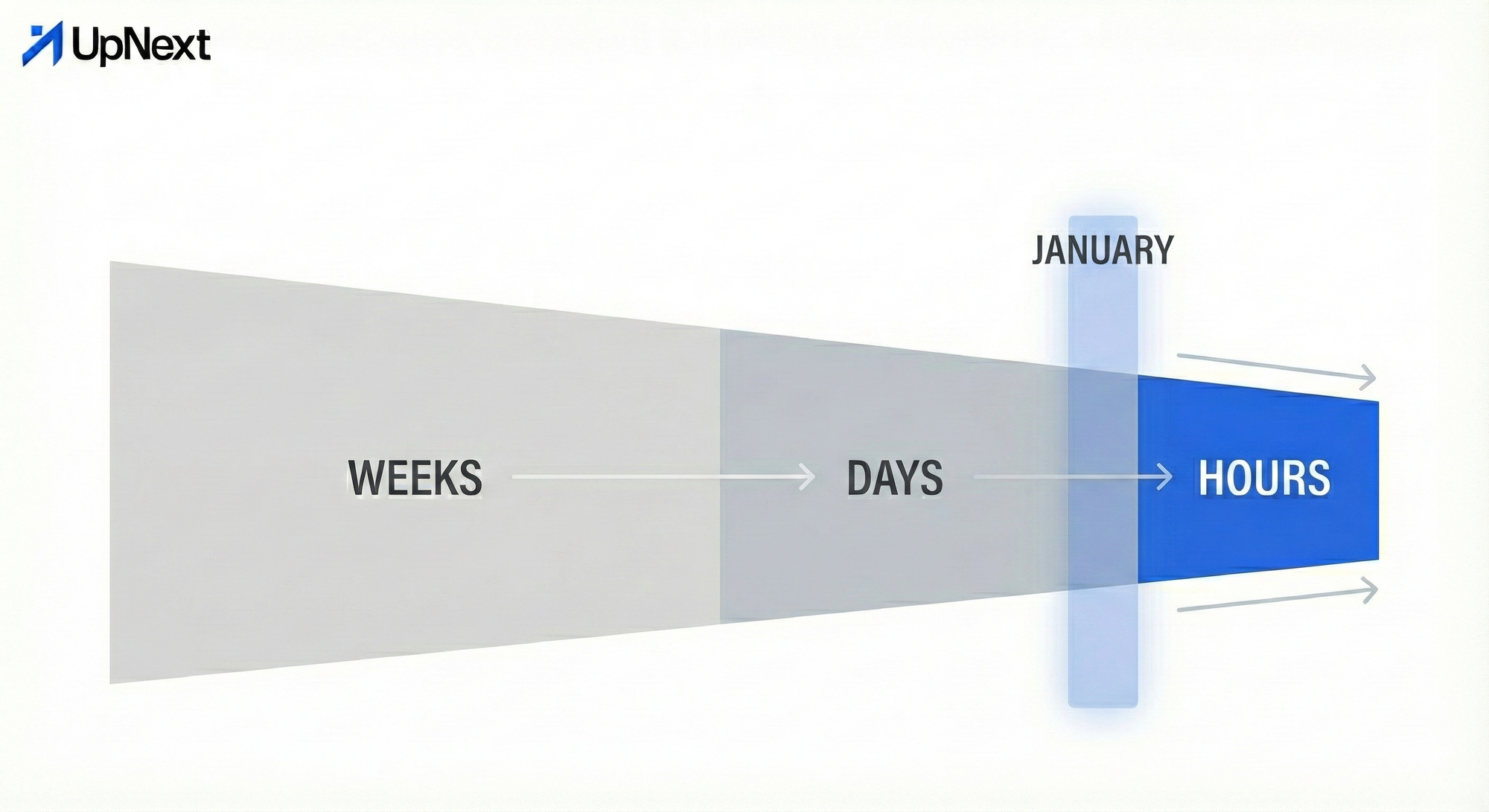
Recruiting windows that once allowed for weeks of deliberation now compress into days or even hours. The calendar matters more. January matters more. Waiting carries real cost.
This tension between speed and certainty has already reshaped portal behavior, forcing programs to choose which one they value more.
In this environment, raw information is not enough. More data does not equal better decisions if it arrives too late or cannot be trusted quickly.
When time disappears, certainty becomes the currency.
NIL Changed the Conversation, Not the Values
Much of the public conversation around NIL still frames it as a moral debate. Inside buildings, it sounds very different.
NIL now functions as a price signal. Conversations revolve around market rate, comparables, and precedent. The concern is not whether players should be paid. It’s how to avoid overpaying, underpaying, or distorting the internal economy of the roster.
This shift toward fairness as infrastructure rather than ideology has been unfolding quietly across the ecosystem.
Without shared benchmarks, pricing becomes inconsistent. Risk increases. Emotion fills the gaps where clarity should live.
The Hardest Part Is Internal Alignment
The biggest challenges in College Football 3.0 are not external. They’re internal.
Recruiting staffs, personnel departments, coaches, and NIL stakeholders often operate from different data sets and different clocks. Disagreement is not the problem. Uneven trust in inputs is.
When alignment breaks down, decisions stall. Or worse, they reverse. Not because the answer changed, but because confidence did.
This is where trusted systems quietly do their most important work. They give organizations a shared starting point and let people argue about football again, not facts.
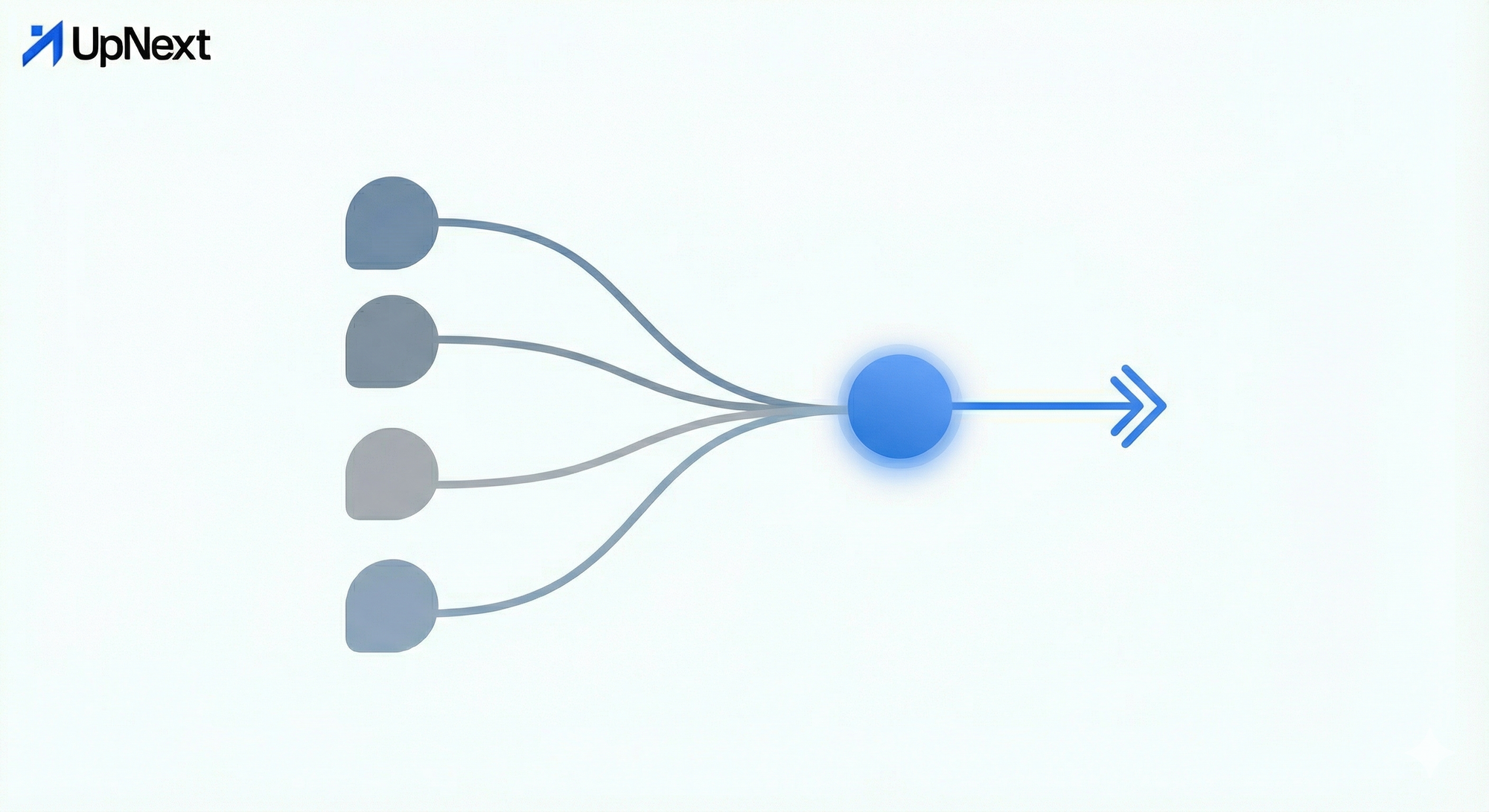
The Quiet Advantage
The most interesting thing happening in this market is not who is moving the fastest. It’s who looks the calmest.
Programs with trusted infrastructure do not feel louder or more aggressive. They feel earlier. More decisive. Less reactive.
They second-guess less.
They re-litigate fewer decisions.
They protect staff energy.
The absence of scramble is becoming a competitive advantage.
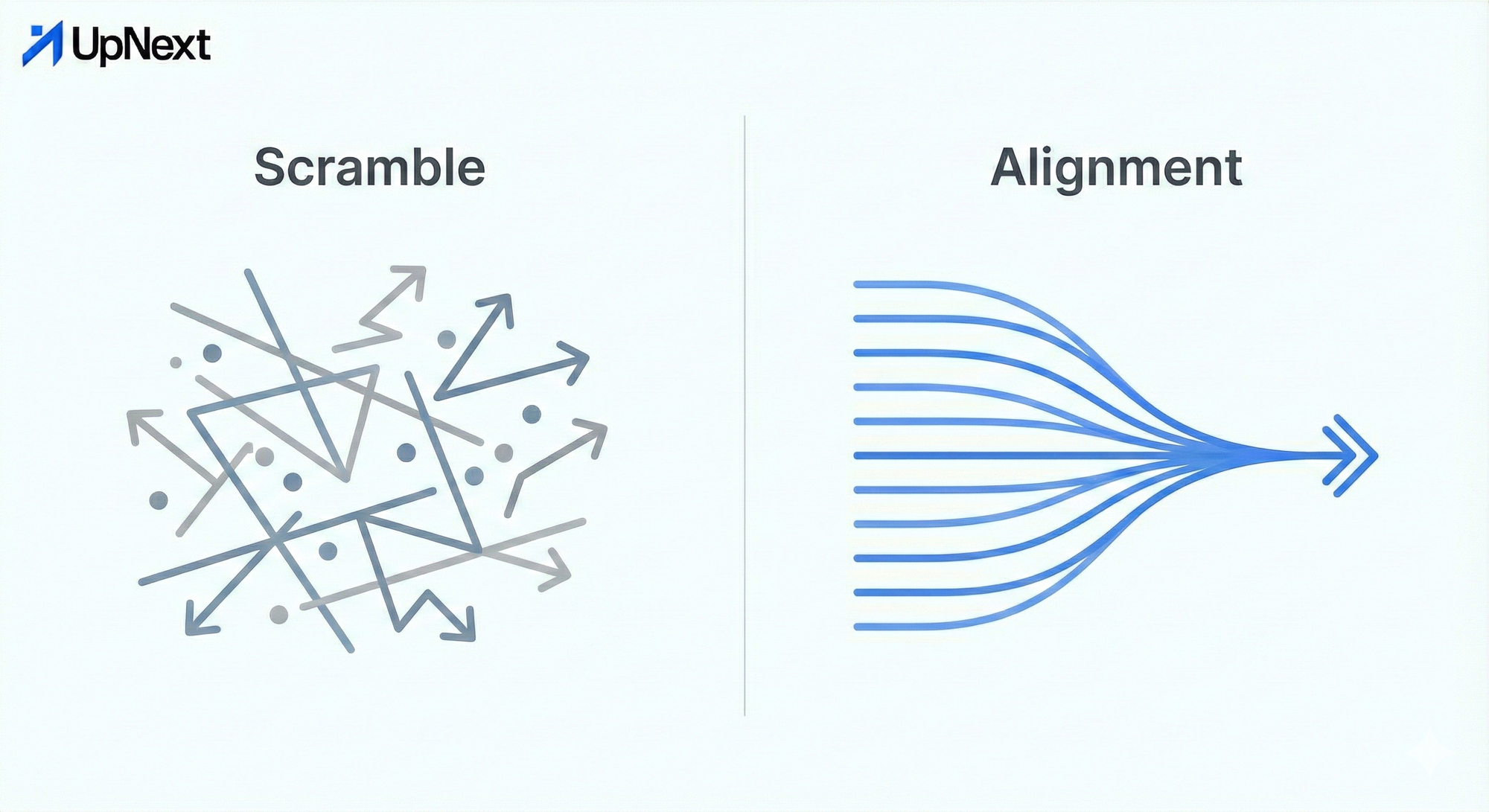
What This All Adds Up To
College Football 3.0 is not louder than what came before. It is less forgiving.
Money formalized decisions that used to be informal. Mobility shortened feedback loops. January turned into a market moment rather than a pause.
The gap between staffs that know how to recruit college athletes and those still recruiting as if every player is a projection is widening quietly, but decisively.
This entire Truth Window has been about one idea.
Trust does not slow the game down.
It lets the right people move faster.
College football didn’t change overnight.
But the cost of being wrong did.
And the market has already adjusted.
If you want the truth behind the noise every week, you’ll want The Trusted Source.
Our weekly newsletter breaks down what’s really happening inside the sport — the signals, the shifts, and the conversations that never make it into the headlines.