Tuesday, November 4, 2025
The Truth Series: The Calm Before the Portal
As the NCAA shifts to a single transfer window in January, the calm inside college football’s recruiting rooms isn’t peace — it’s preparation. The Calm Before the Portal takes readers inside the new data infrastructure transforming chaos into clarity, showing how real-time trust and connected visibility have become the sport’s ultimate competitive edge.

UpNext
Author
Inside the data rooms where trust has replaced panic. And where the next storm is already mapped before it hits.
The room is quiet in that way only a football office can be quiet. Monitors glowing, coffee cooling on the desk, a lone cursor blinking beside a player’s name. The calendar says October, but everyone in the building is already living in January.
Last year at this hour, the same space would’ve sounded like chaos: phones buzzing, DMs pinging, half-verified names flying through spreadsheets. Nobody trusted anything. Every roster was a rumor.
Now, the board looks different. The cards aren’t guesses. They’re connected, verified, alive. Intent markers update in real time. Each player is more than a name: probability, eligibility, fit score, truth. The analysts move slow because they can. The panic’s been replaced by process.
Across town, others are still grinding through old systems. GAs are ten browser tabs deep, refreshing transfer announcements that may or may not be real. The spreadsheets lag behind reality; the chaos hasn’t learned its lesson. They’ll feel it again soon.
Inside this room, there’s no scramble. Just preparation. Every variable modeled. Every decision already mapped. The quiet here isn’t comfort; it’s control.
The calm isn’t quiet. It’s clarity.
Trust in Motion
The calm holds because everything moves in real time.
Across these screens, information doesn’t trickle. It updates. Portal entries, intent signals, eligibility checks, and target alerts are all pushed directly to the programs that need them, the moment they change. No waiting, no refreshes, no rumor-chasing.
That’s what changed. Last year, every staff was cobbling together chaos; screenshots, texts, three different databases pretending to agree. This year, it’s one synchronized truth. UpNext connects what the sport’s been trying to hold together: portal status, player history, verified analytics, and fit data, all in a single frame.
The system doesn’t just show who’s available; it shows who’s right. Coaches tag targets, and the platform surfaces matches built on thousands of data points, using metrics no other tool in their stack can see. When a new athlete fits that model, the staff knows before the rumor hits X.
That’s why calm is possible. Not because the storm disappeared, but because trust got faster than the weather.
The Human Layer
Last winter, one director of player personnel described his office as “triage.”
He remembers having three phones open and two spreadsheets that never matched. One player’s name would appear twice; another would vanish entirely. Rumors outran truth by hours. “We’d be chasing a kid we thought was in the portal,” he said, “and find out two days later he wasn’t even eligible.”
Now, it’s different. UpNext does the chasing.
“When we tag a guy, we know what’s real,” he said. “We know if he’s actually in, if he fits, if we can move. We don’t waste energy guessing.”
That confidence changes how staffs work. Instead of scouring the portal in panic, they plan. They sleep. They game-plan the next week instead of firefighting the last one.
You can feel it across the room. The new kind of silence. Not relief. Control.
The Competitive Window
Here’s what the new market really looks like:
When the portal opens, the first 48 hours decide almost everything. Offers, conversations, intent. Blink, and you’re behind.
And this winter, there’s no second chance.
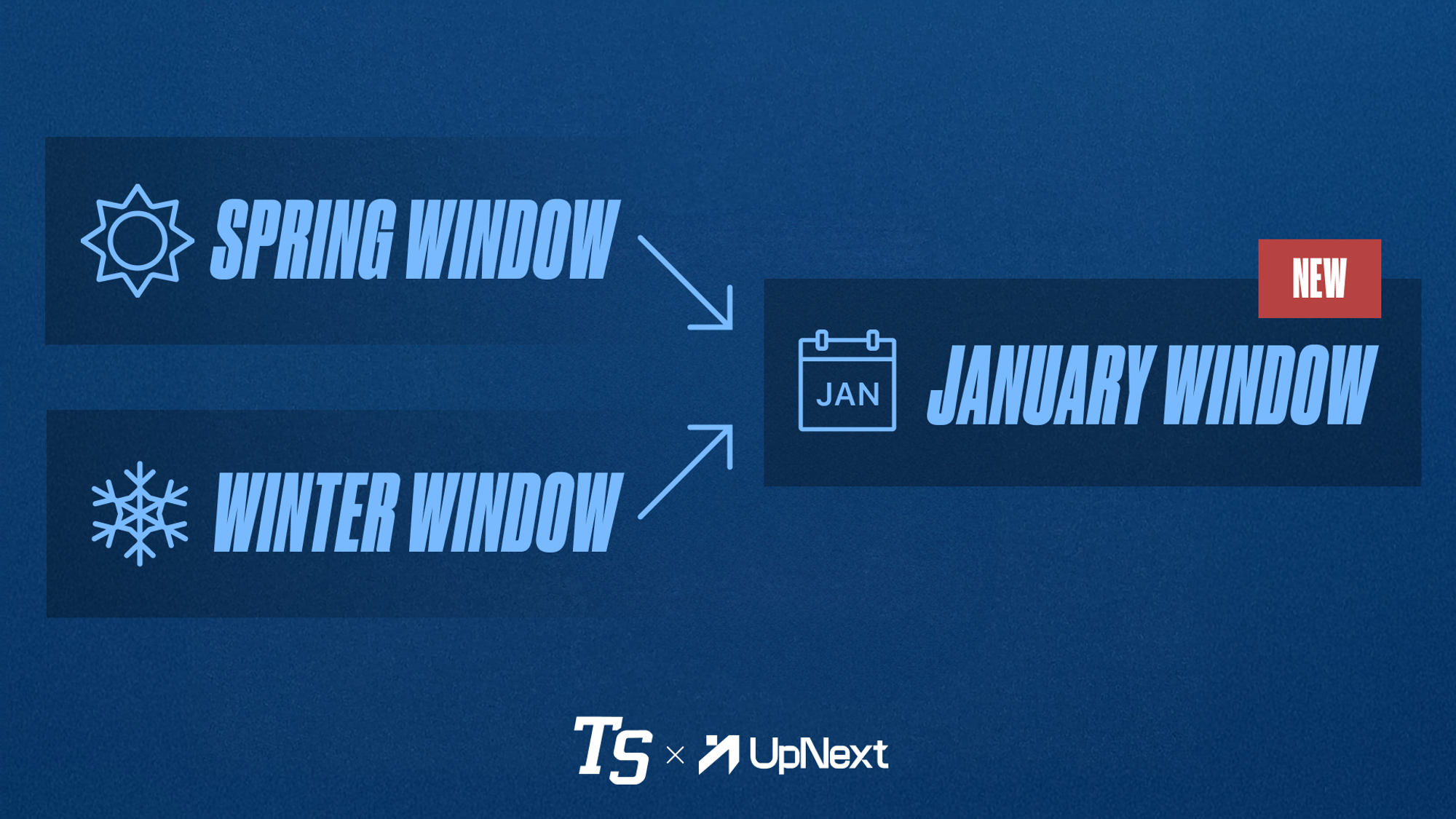
With the NCAA’s move to a single transfer window in January, the entire cycle compresses into one high-pressure sprint. One window, one shot, one wave of movement that will define rosters for the year ahead.
Programs running on legacy systems last year averaged nearly 27 hours between portal entry and first verified contact.
Programs using connected data cut that window to under six.
That’s the gap between reaction and readiness. And it’s widening fast.
The teams that treat trust as infrastructure aren’t faster because they try harder. They’re faster because their information moves first.
Every portal cycle is a compression test: who’s built on trust, and who’s still guessing.
And with a single window ahead, the test just got tighter.
The Cultural Shift
Across college football, the storm hasn’t vanished. In fact, it’s only getting louder. More athletes, more agents, more opportunity, more noise. Every program will say it’s ready. Most won’t be.
Because readiness isn’t about volume. It’s about visibility.
The NCAA’s new one-window format has changed the physics of the portal. There’s no margin for reaction. The chaos of last year won’t just repeat. It will intensify for anyone still juggling disconnected systems.
The programs that thrive this winter won’t be the loudest or the most aggressive. They’ll be the ones that see the field before anyone else. Not through luck or intuition, but through verified connection. That’s what trust is now: not a slogan, but a system.
The industry’s moving toward one inevitable truth: the fastest decisions come from the most stable information. And stability comes from trust.
The game won’t slow down. The chaos won’t stop. But the ones built on truth will never have to chase it again.
The calm isn’t quiet. It’s clarity.
Subscribe to The Trusted Source for weekly insights on how trust, data, and culture are reshaping college football.