Tuesday, November 11, 2025
The Truth Series: The Data Storm
As the new single-window era begins, the first 48 hours of the transfer portal no longer feel like a storm. They look like a system coming into focus. The Data Storm reveals how verified information and connected visibility are reshaping the market’s most chaotic window, turning speed into precision and data into trust.

UpNext
Author
The Data Storm
Inside the first 48 hours of the college football transfer portal.
The room hums. Screens glow. The cursor blinks. The storm is minutes away.
Last winter came in two waves. This year, there’s one.
The NCAA’s single January transfer window compresses everything into a tighter sprint. One opening, one wave, one chance to move with conviction. Then the clock starts.
What’s different isn’t the weather. It’s the view.
Cards no longer carry just a name. They carry injury history, performance trends, athlete-provided growth notes, eligibility markers, and verified representation.
The picture isn’t who’s available. It’s who’s real.
Verification turned noise into knowledge.
Lessons from the Last Storm
The last two portal bursts were the loudest college football has seen. Information moved fast. Truth lagged.
Some staffs drowned in mismatched spreadsheets and rumor threads. Others built radar.
Our data and conversations with player-personnel directors show that more than 50% of initial agent calls last cycle went to contacts who didn’t actually represent the athlete in question. Source check time replaced evaluation time.
Teams operating on connected, verified data cut misroutes to near zero by starting from confirmed representation inside the system.
That change isn’t cosmetic, it’s cultural. Fewer loops, fewer rescues, more decisions made once.
The Data Behind Certainty
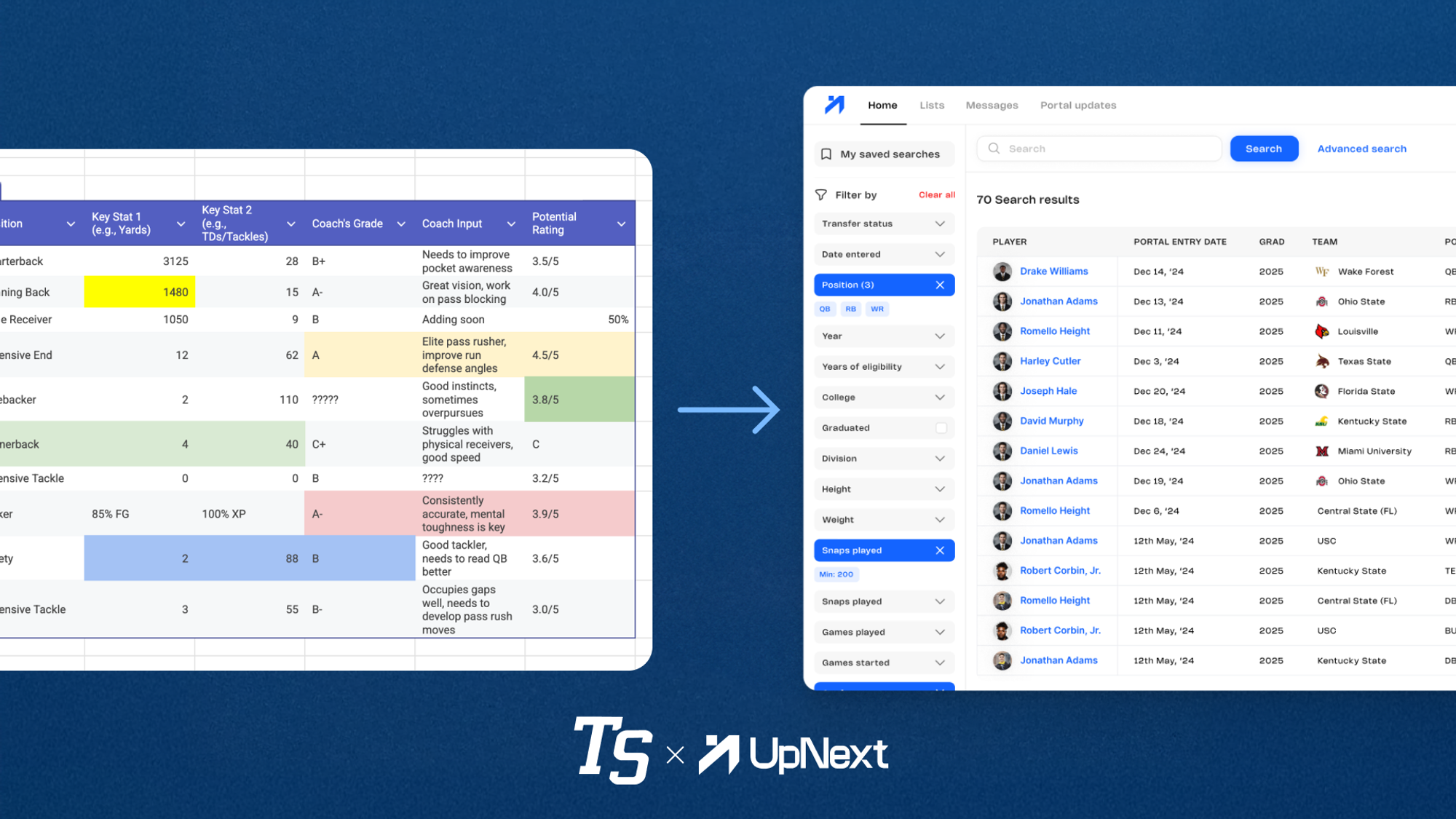
The difference this time is connection. Injury reports, game logs, performance analytics, athlete-provided data, and verified representation now live in one frame.
From our internal tracking and partner program feedback, nearly 1 in 4 transfer athletes last cycle arrived with a prior injury record the receiving staff hadn’t verified. Not because it was hidden — because it was scattered.
With all layers on the same grid, context stops hiding. A name appears with its story already attached.
When decision-makers can see the full story, they stop guessing which story is true.
Inside the First 48 Hours
When the window opens, names pour in. Verified data filters instantly: real players, real agents, real opportunities.
The first day doesn’t feel frantic anymore. It feels precise.
Precision is its own kind of calm.
The Human Shift
Across the hall, a director of player personnel watches a board that moves before the texts do.
A name appears with injury overlay, performance trendline, athlete-submitted insight, eligibility marker, and verified agent contact.
One click. A coordinated move with head coach and compliance in seconds.
No phone chains. No double-entry. No re-checks in message threads. Just movement grounded in what’s already true.
“Feels strange,” the director says. “The storm’s still out there, but it isn’t hitting us.”
Trust doesn’t stop weather. It builds shelter.
The Cultural Shift
“The storm is inevitable. Clarity is optional.”
The industry is learning that one window at a time.
Speed still matters, but speed without truth multiplies chaos.
The market is shifting from adrenaline to alignment, from reaction to readiness.
In a single-window era, the advantage is won before the first call, in the quality of what you already know.
The programs that win won’t be the ones who shout the loudest or move the fastest.
They’ll be the ones whose information moves first because it’s verified.
The calm isn’t quiet. It’s clarity.
Missed Week 1 of the series? Read it here.
Want to be updated weekly when these drop? Subscribe to our newsletter.