Wednesday, August 19, 2026
Verify Before You Move
Four checks for a board you can defend when the timeline is a weekend. Start with the first one this week.

UpNext
Author

UpNext spent the first week of August at the Personnel & Recruiting Symposium in Nashville, working booth conversations with personnel staff and directors of scouting, panel sessions on roster strategy, and hallway conversations with agencies. Two sides of a market that rarely get put in one building, describing the same problem from opposite ends of it.
What follows is the practitioner version of what we heard. Third party programs, agencies and individuals are anonymized throughout, because the people who said these things did not sign up to appear in a blog post. The category read behind it, on why the market rewards operators who verify first, ran last week in The Verification Gap.
The market does not wait for your process to be ready. Build it now, before the next ruling lands on a Friday.
The framework
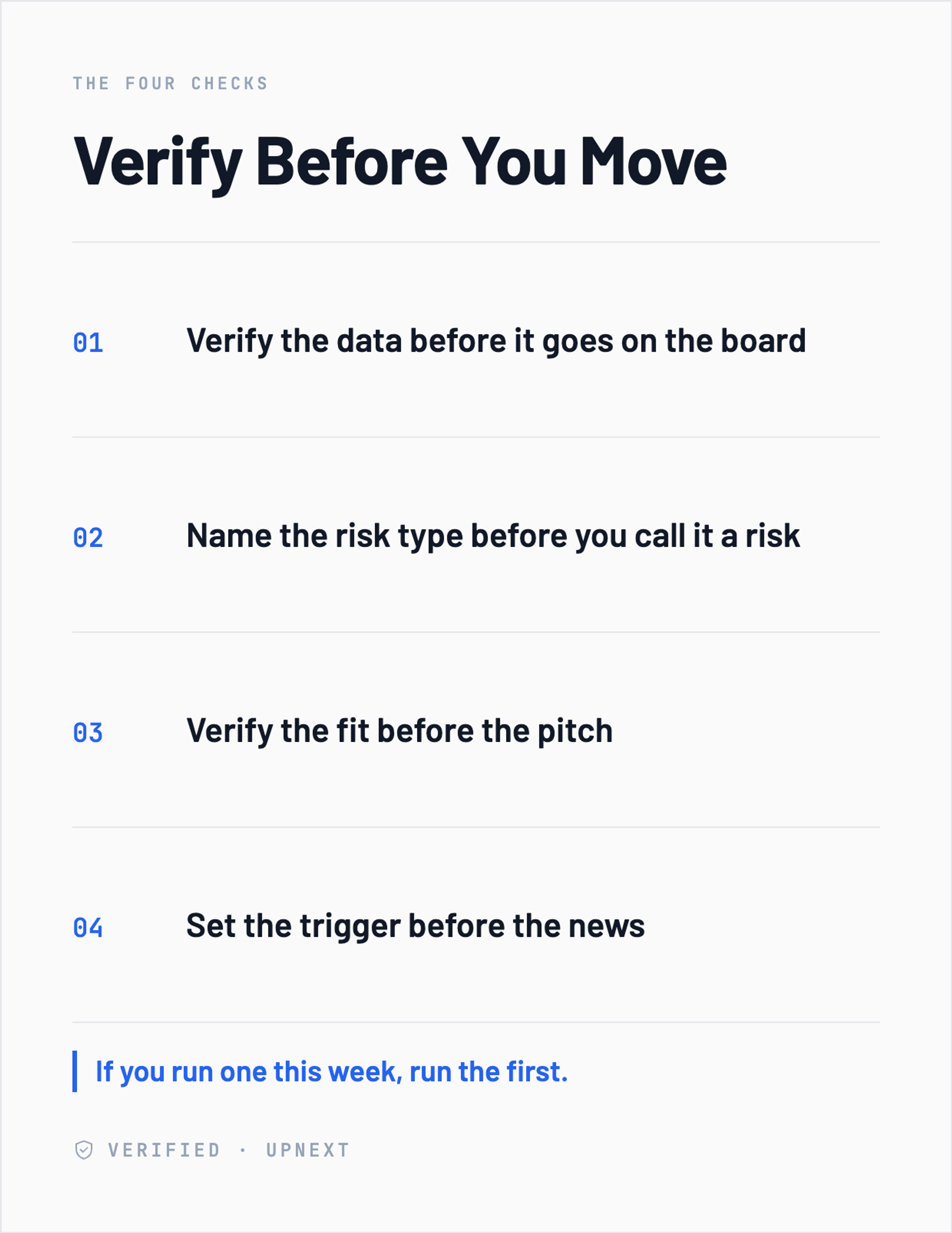
- Verify the data before it goes on the board.
- Name the risk type before you call it a risk.
- Verify the fit before the pitch.
- Set the trigger before the news.
If you run one of these this week, run the first. Confirming who represents a player is the check that protects every other one on the list, and it does not need a new hire.
1. Verify the data before it goes on the board
A list pulled from last season's conference standings is incomplete, and incomplete gets expensive fast. Two names on a board can list the same agent when that agent represents one of them.
Worked example: a staff builds its board off last season's conference lists, a common starting point. Three weeks later, two of those names list the same agent, who actually represents one of them. The board was accurate when someone typed it. It was wrong by the time it mattered.
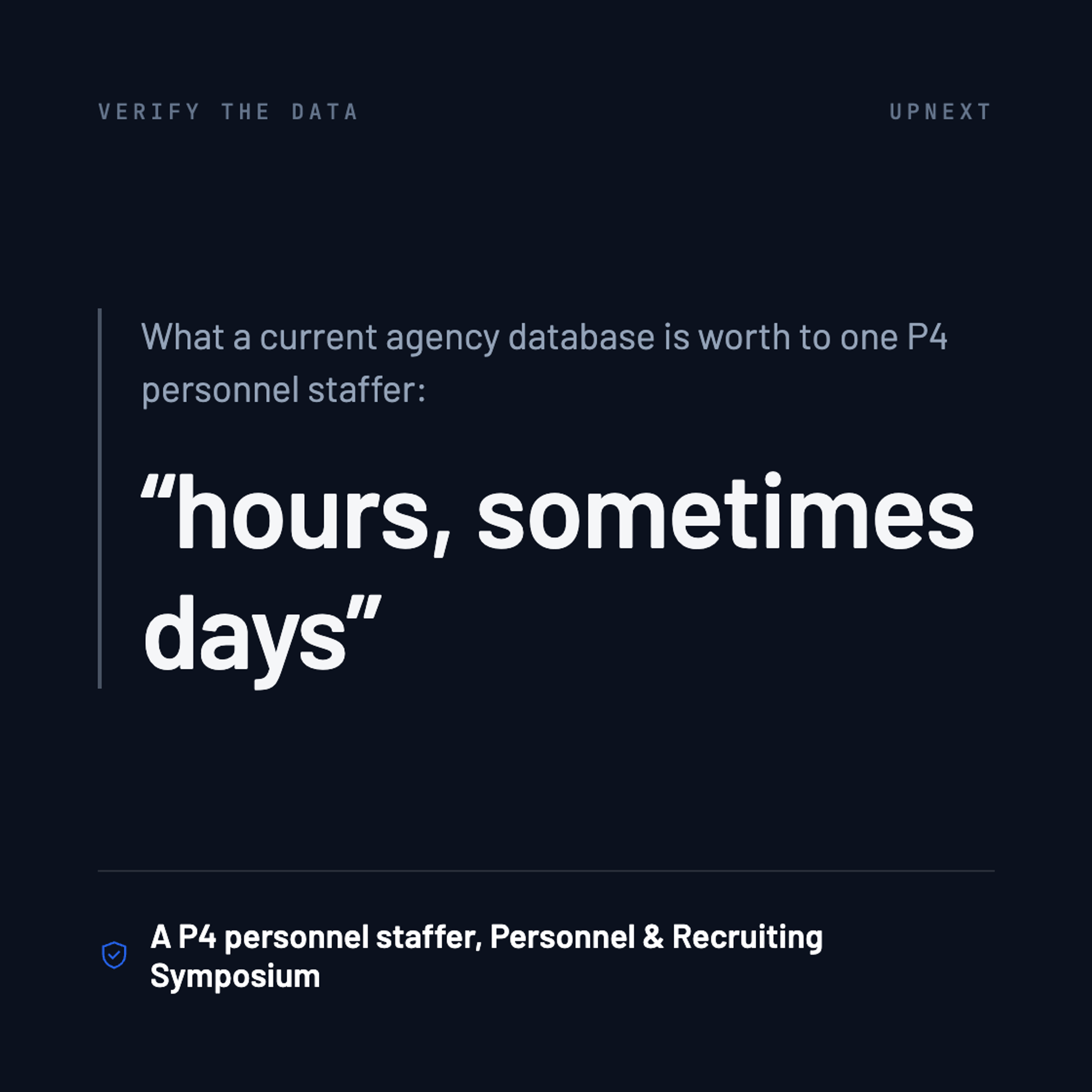
One P4 personnel staffer said a current agency database alone would save his staff hours, sometimes days, per week.
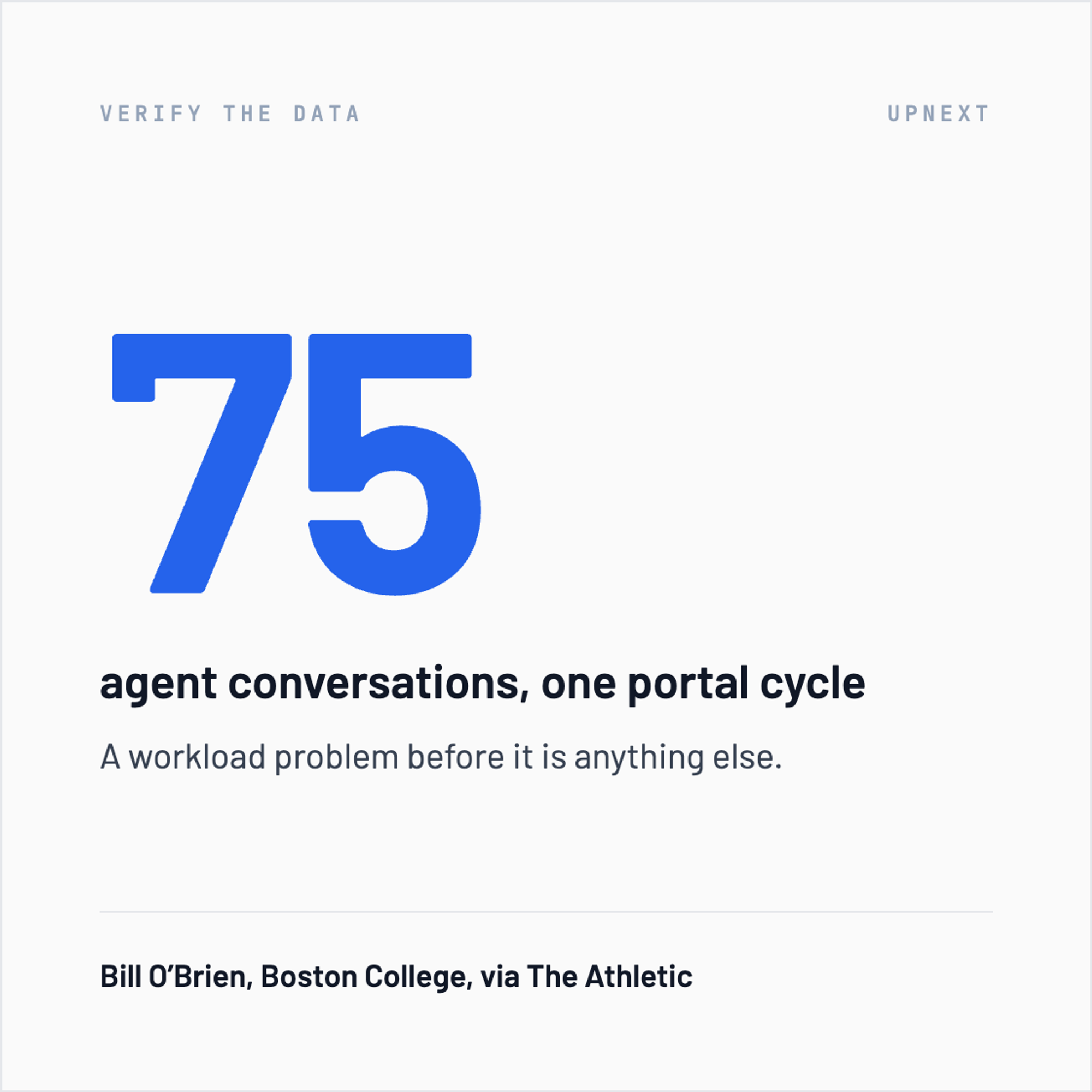
The volume is on the record now. Boston College coach Bill O'Brien told The Athletic he spoke with around 75 agents during a single portal cycle. Seventy five conversations is a staffing problem before it is anything else, and it gets manageable the moment a staff knows which of those calls carries the relationship.
2. Name the risk type before you call it a risk
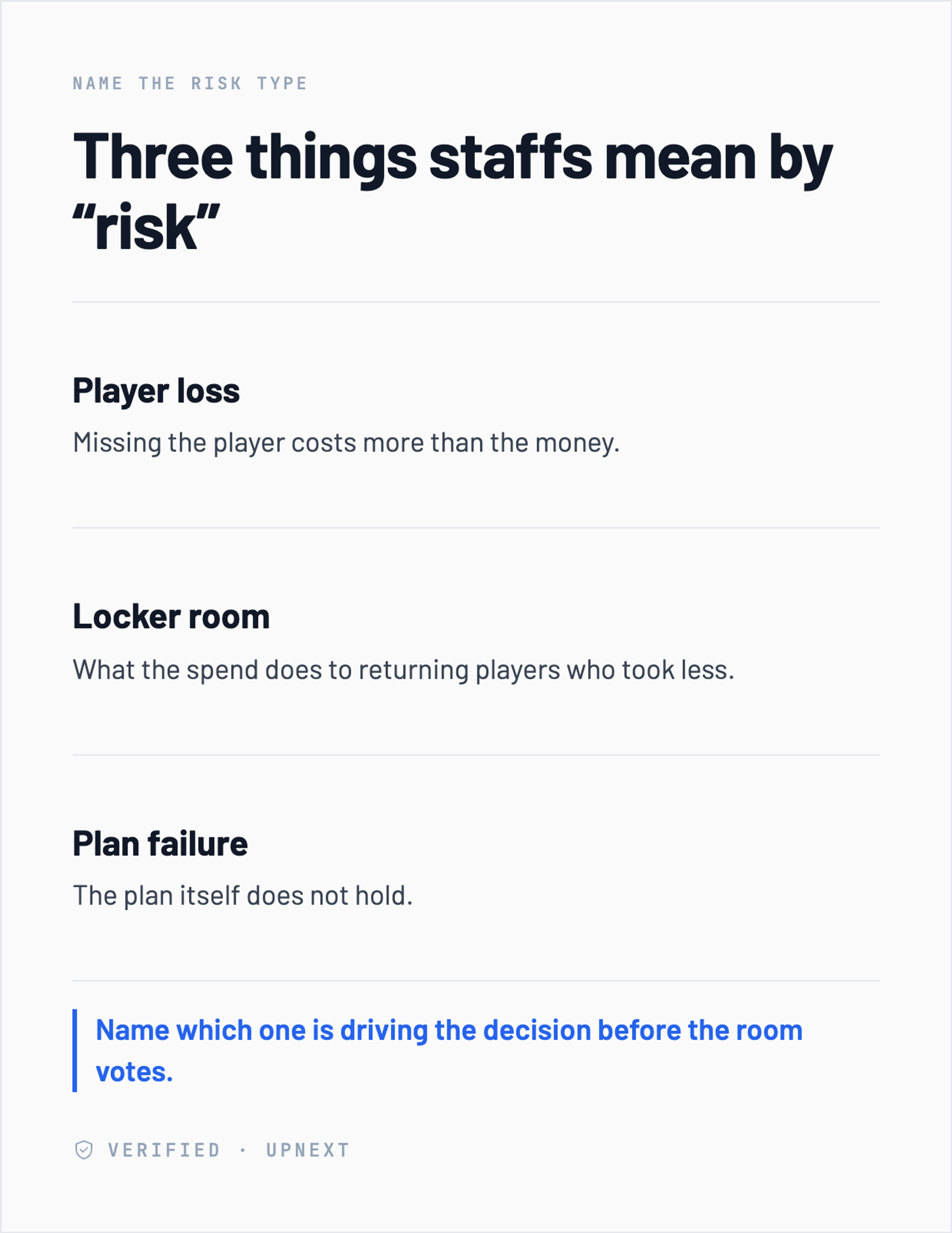
"Risk" showed up in nearly every roster panel this cycle, and it meant three different things depending on who was using it: the risk of losing a player, the risk to the locker room, and the risk that the plan itself does not hold. Treating all three as one word is how a staff talks past its own head coach without realizing it.
Worked example: a program is deciding whether to commit a large share of its budget to one portal name. Framed as player loss risk, the case for spending is strong. Missing the player costs more than the money. Framed as locker room risk, the same spend raises a harder question about what it does to returning players who took less. Name which risk is driving the decision before the room votes on it.
3. Verify the fit before the pitch
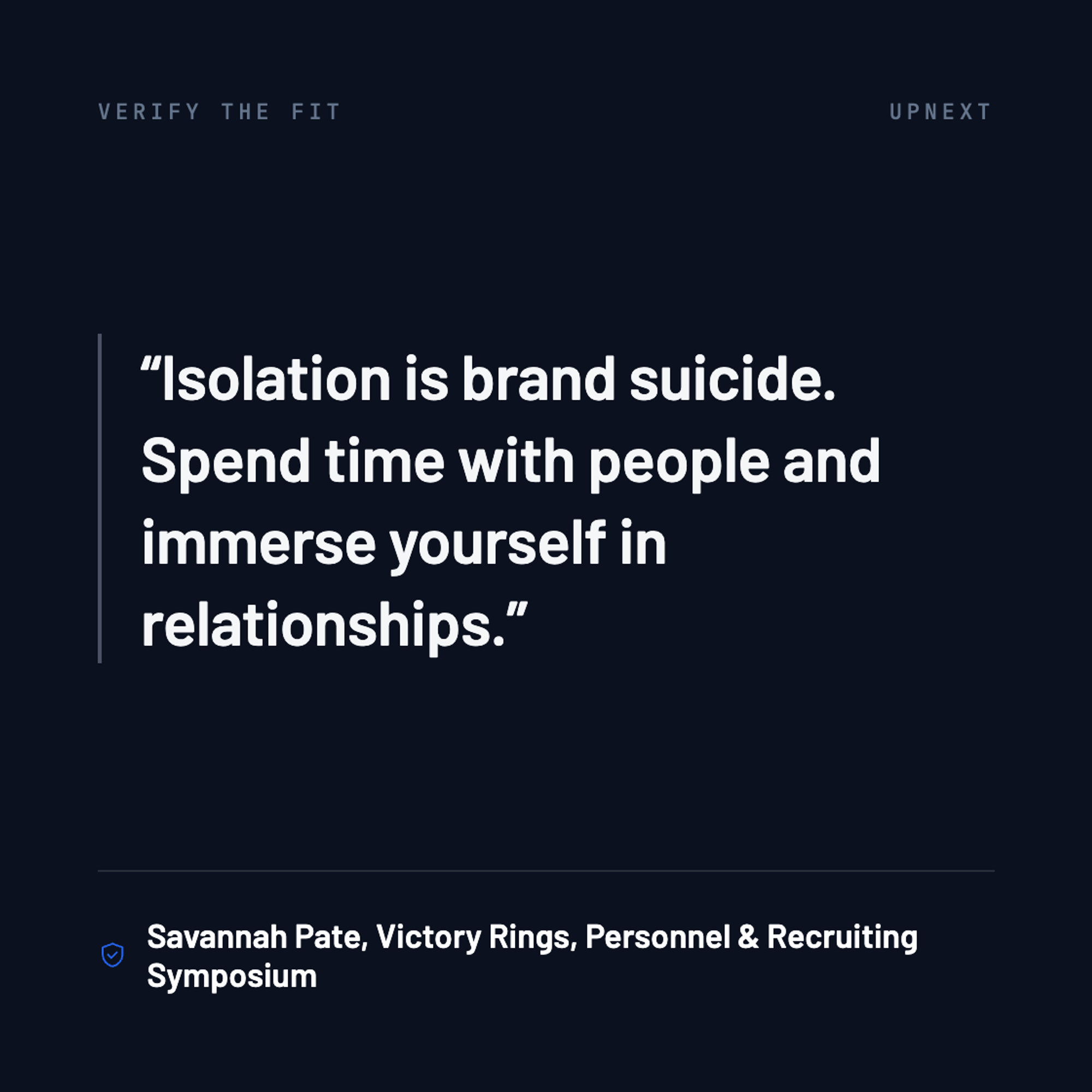
The line that stuck from Nashville came out of a marketing session. "Isolation is brand suicide. Spend time with people and immerse yourself in relationships," said Savannah Pate, an account manager at Victory Rings, speaking on program branding.
The same logic runs both directions in recruiting now. An athlete's camp is vetting a program's fit the same way a program should be vetting an agent's.
The athlete side is already running this check. Offensive tackle Zen Michalski told The Athletic he took less money to sign with Indiana because he judged it the better fit. A program should assume the same read is being run on it.
4. Set the trigger before the news
On Friday, July 31, a federal court granted the high school Class of 2022 an extra year of NCAA eligibility. The effect lands on transfer boards, because every one of those athletes is now a name a staff weighs against the roster it already has. A board verified before a ruling is a board you can read on a Saturday.
The check: write down the three events that would send you back to step one, and name who re-runs it when one lands. An eligibility ruling. A coaching change at a target's current program. A new agency of record. Decide that on a Tuesday, before the news makes the decision for you.
Run all four on one case
A program is three weeks from the portal window's midpoint when a starting cornerback enters. The staff already has a name on the board from spring evaluation.
Step one: confirm the agency of record before anyone acts on the contact. If it cannot be confirmed, the name stays on the board marked unverified and nobody works from it.
Step two: name the risk. This is mostly player loss risk. Missing the window costs more than a rushed evaluation does.
Step three: before the call, confirm the fit both directions. Does this program's actual situation match what the player's camp is looking for.
Step four: log the trigger. A cornerback who entered once can enter again, and the agency of record is the field most likely to have changed by then.
Proof
UpNext is the verified network for college athletics, where programs, athletes, and agencies operate. 20+ agencies are certified on the network. Certification means a background check completed and contracts on file. Across the network: 300+ programs, 750+ coaches, 140,000+ athletes, 70+ conferences, NCAA approved.

Questions worth asking
How long does this actually take to run?
The four checks add minutes to a decision that already takes days. What they remove is the week you lose finding out step one was wrong after the fact.
Does this replace film evaluation?
No. It protects the evaluation you already did from being undone by information that changed underneath it.
What if a name never clears step one?
It stays on the board, marked unverified, and it does not get a call. You can still evaluate an unverified name. Acting on one is where it costs you.
Close
Build the board off what is verified. The market is not going to slow down long enough to let anyone double check later.
Explore the network.
This process's category read, on why the market rewards operators who verify first, runs in last week's Market Read: The Verification Gap.