Wednesday, August 12, 2026
The Verification Gap
The market moves in days now. Most boards still run on data nobody's confirmed.

UpNext
Author
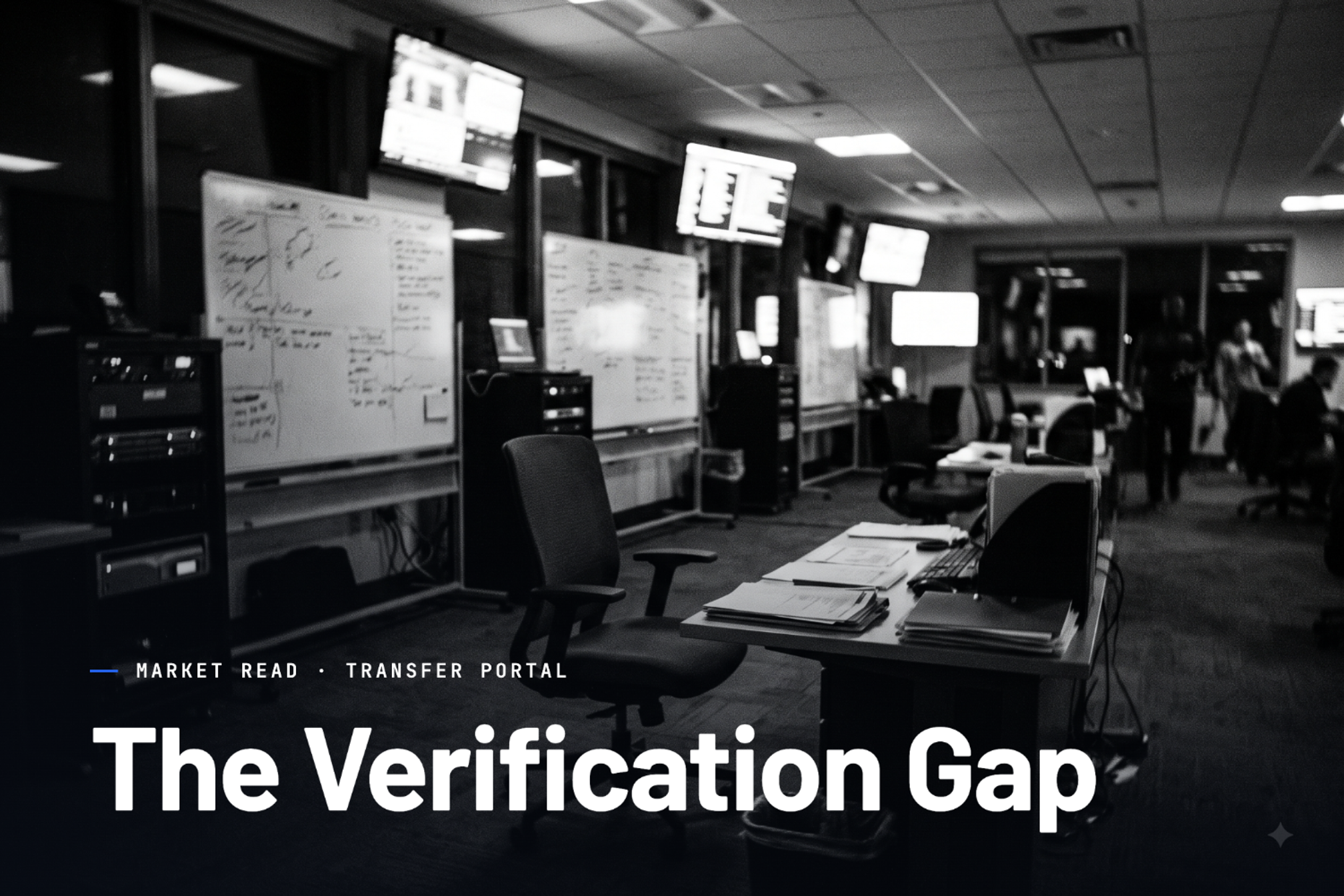
A court ruling lands on a Friday afternoon.
By Monday morning, boards have already moved.
Nobody waited for a memo.
The information behind those moves is a different story.
Three days in Nashville
UpNext spent the first week of August at the Personnel & Recruiting Symposium in Nashville, working both sides of the room: booth conversations with personnel staff and directors of scouting, panel sessions on roster strategy, hallway conversations with agencies. It felt less like a trade show and more like a reunion with an agenda, which is exactly the kind of room where people say what they actually think instead of what's on a deck. Programs and agencies don't usually compare notes in the same building. This year they kept describing the same problem from opposite ends of it.
One SEC director of scouting said every database he's used is missing something. Rosters in one, portal movement in another, weekly stats nowhere consistent, and on the agency side, nothing close. That's one scout's read on the tools he's tried, not a verdict on the whole market, but it lined up with what personnel staff kept saying about how a board actually gets built.
What this means
- A board built off a hand-typed list is exposed the moment the market moves faster than the list.
- "Risk" is doing three jobs in most personnel rooms this cycle, and only one of them is about the player.
- Knowing who actually represents a player is still a manual problem, and manual problems do not hold up when the timeline shrinks to a weekend.
The board still gets built by hand
At the booth, the answer to "how do you build your board" was almost always some version of the same process: someone pulls last season's conference lists, adds every player the program already offered in high school, and then the staff waits for agents to call. It works, until the market moves faster than the list.
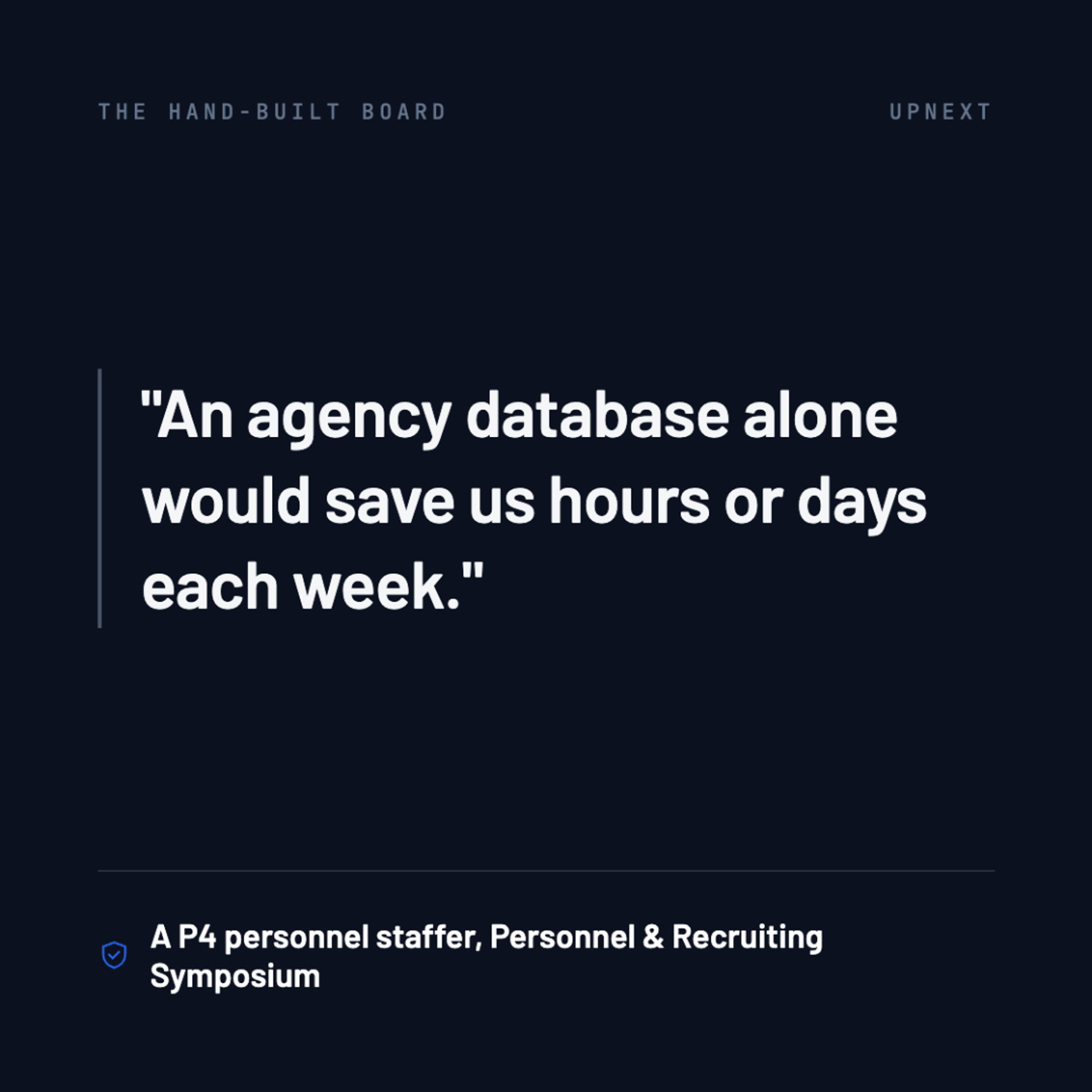
One P4 personnel staffer put a number on it: an agency database alone would save his staff hours, sometimes days, a week. Not a new list. Just knowing who represents who, and trusting that it's current.
Knowing who's real is still a phone call
Knowing who actually represents a player, when that agent is not already a client, is still mostly a phone call and a guess. That was the piece almost nobody at the symposium claimed to have solved, on either side of the room. Not a small problem. The piece that requires the agency itself to be verified, not just listed somewhere.
Why it compounds
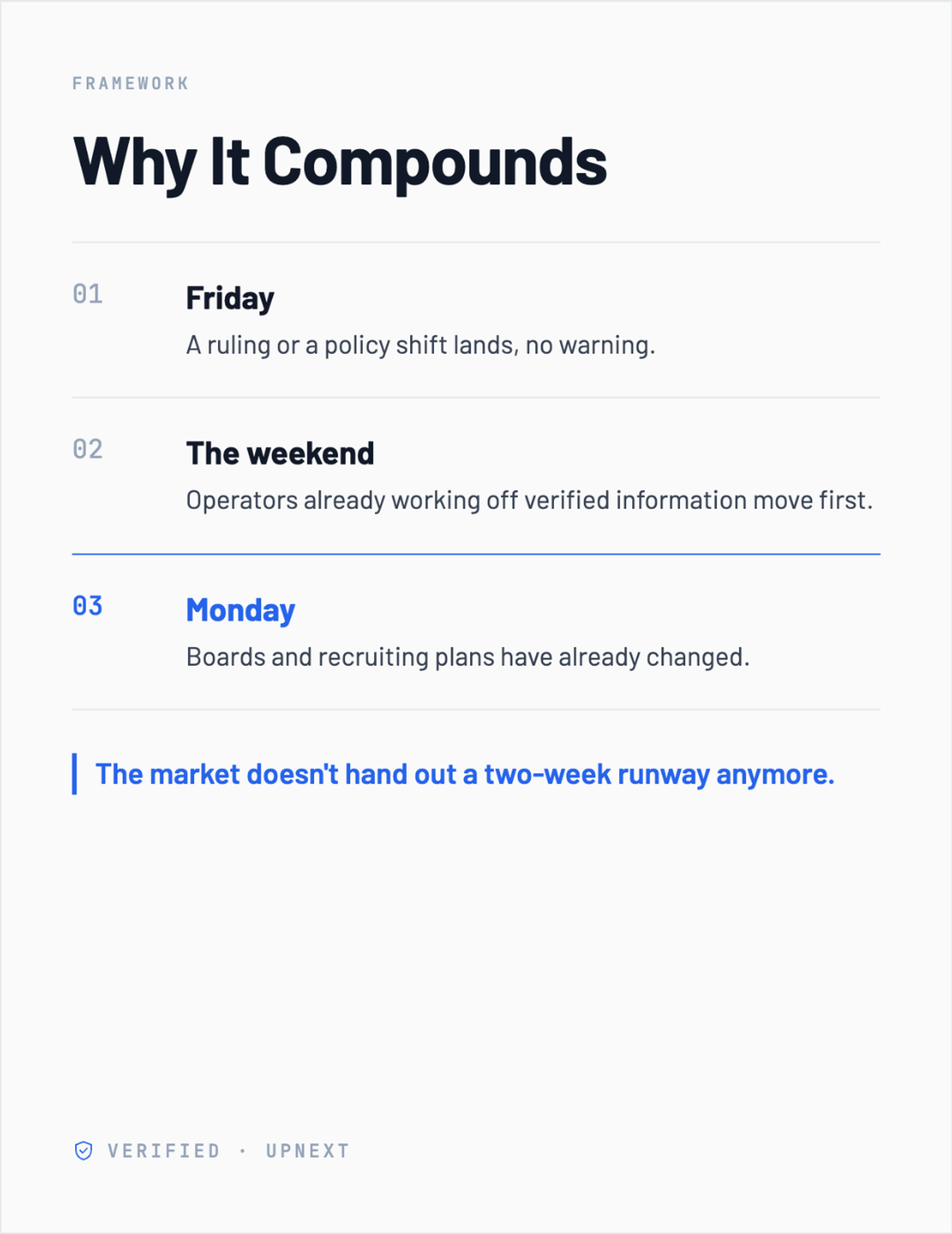
On Friday, July 31, a federal court granted the high school Class of 2022 an extra year of NCAA eligibility. By the following week in Nashville, agents and personnel staff were already talking through how it had reshuffled rosters and recruiting boards. Nobody got two weeks to update a plan. They got a weekend.
One symposium session walked programs through losing sixteen of twenty two starters in a single offseason, framed as a planning exercise. Nobody in the room laughed. That is the timeline this market runs on now, exercise or not.
A separate compliance session on navigating the current rules filled early and stayed full the same week, for the same reason. Nobody wants to be the one still working off last month's rule when a new one lands.
That is the pattern operators described all week. A ruling or a policy shift lands without warning, and the programs and agencies already working off verified information move first. The ones still confirming basic facts move second, if at all.
The three sides
A program that trusts its board moves first. An agency with a verified profile gets picked first. An athlete represented by someone verified does not have to wonder if the right people actually know who is in their corner. Each side's participation is what makes the other two worth more, not a feature bolted onto any one of them.
Certified means something specific here: a background check and contracts on file, not a box a coach types a name into.
UpNext runs a network of 20+ certified agencies, each vetted with a background check and contracts on file before it earns a verified profile. Across the network: 300+ programs, 750+ coaches, 140,000+ athletes, 70+ conferences, NCAA approved.

FAQ
Doesn't a bigger database just mean more names, not better ones? More names help nobody if half of them are stale. The gap operators described was not volume. It was confidence that what's on the board is still true.
What changes for a program that already runs its own scouting database? Nothing about how they evaluate film. Everything about how fast they can trust a name the moment it shows up on someone else's board too.
Where this lands
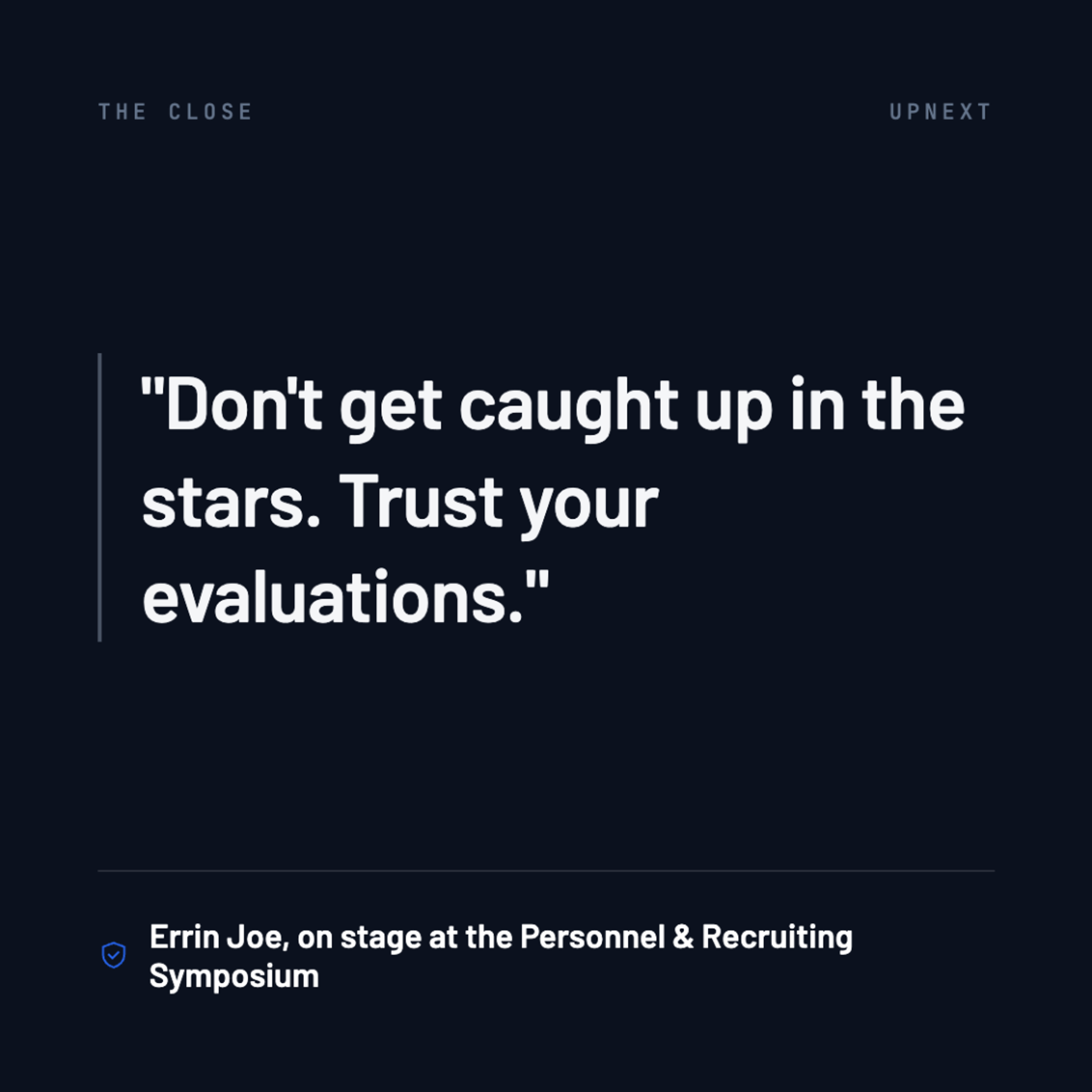
"Don't get caught up in the stars. Trust your evaluations," Errin Joe said on stage in Nashville. He was talking about grading players. It is the same rule for grading the board itself.
The teams that move first when the rules change are not the ones with the boldest read of the room. They are the ones who already knew what was true before the room changed.