Wednesday, August 5, 2026
The Window Plan
Every program starts the portal from the same list. The window is won by what you decide before it opens.

UpNext
Author
"Every single team reverts back [to the same starting point], from all the way at the top of the national championship down to JUCO."
Cody Cater is UpNext's COO and a former Wake Forest safety, and he hears programs describe their portal process nearly every day. Ask five staffs how they scout the portal and you can get five answers. "Some will tell you, I scroll through Twitter and I just try and find players that break out," he says. "Some will actually fully break it down for you, like a school did yesterday for us." Division level tells you nothing: "It's completely all over the map, and it doesn't matter what division level you are."
Underneath the variety, the steady programs run the same four moves. Call it the Window Plan.
1. The Baseline
Start where every team starts. "They start with the high school players that they've offered in the last three years, and that is where their initial watch list comes from," Cater says. "That could be a thousand players, that could be a couple hundred. Every one of those players is typically tracked at a baseline for every school."
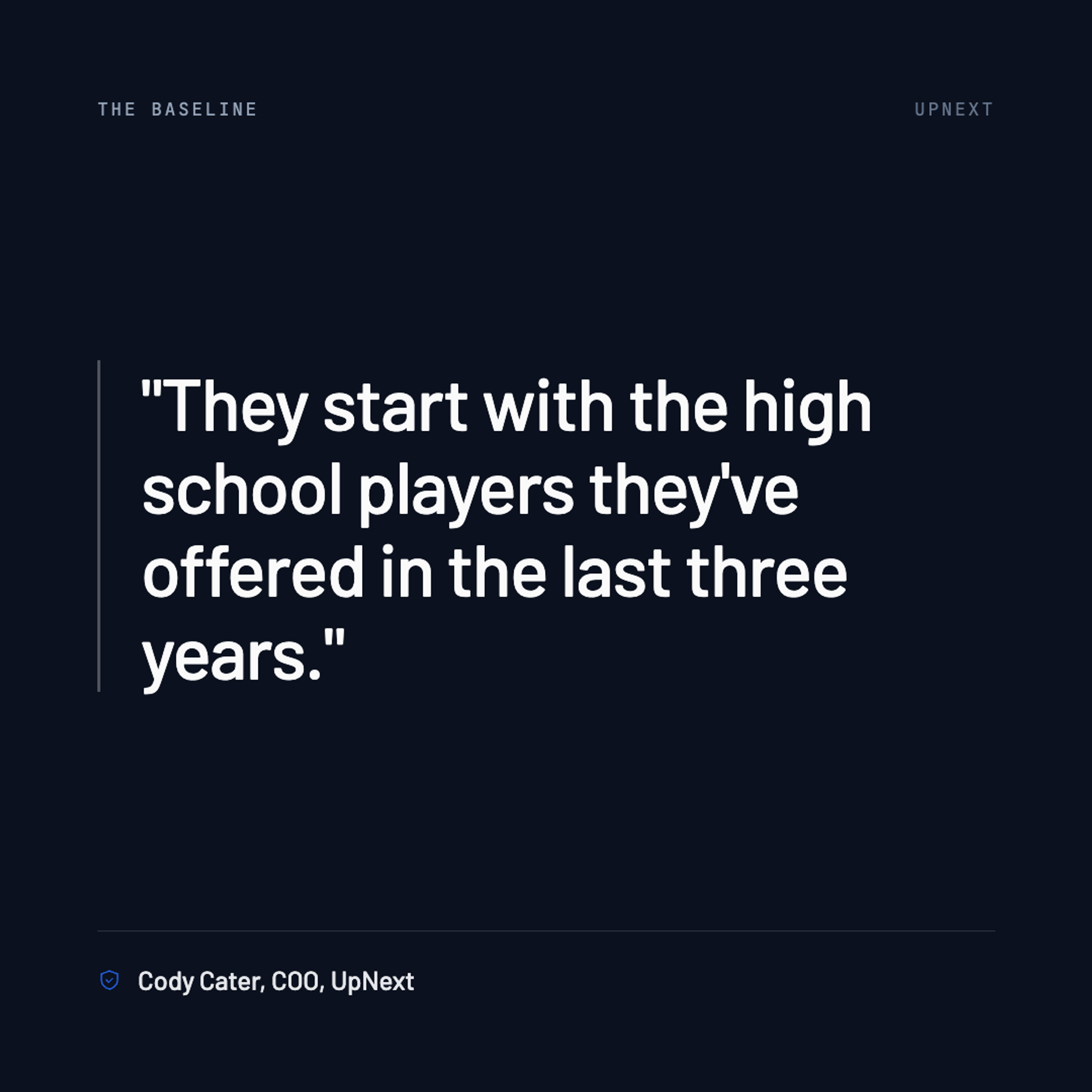
Worked example: a staff that pulls its last three offer classes opens the window with players it has already evaluated, already built relationships with, already watched on film. The baseline is cheap conviction. It is also universal, which is exactly its limit.
2. The Edge
"The real difference comes from where do we go elsewhere to recruit and watch and manage," Cater says. The edge is decided before the window: which conferences you mine, whether you shop FCS and Division 2 risers, which agency lists you pull, which positions you refuse to fill late.
Worked example: a program that has come out of the weeds in the last two seasons walked Cater through the distinct buckets its portal recruitment comes from. Hearing the buckets, he says, "made a lot of sense as to why the success has happened." The edge was designed, and it was on paper before January.
3. The Ledger
Strategy dies without tracking. The second separator, Cater says, is "how the process actually happens, who does what ... when is a decision made, when does it get to the top." It stems from top-down leadership, the new GM roles at the P4 level. Below that level, coaches wear the GM hat on top of their own job.
Worked example: a staff below the P4 line where a position coach also runs personnel. Every evaluator's read on a position lands in one place. Each bucket has one name next to it. Everyone knows the read moves up to the head coach on Sunday night. When the window compresses to days, that staff moves while the room next door is still reconstructing who said what about whom.
4. The Hold
The hardest move is keeping the plan. "The ones that have a good season are happy with the process they had and are going to do it again and keep doing it until they don't," Cater says. Two flat years and staffs start switching everything at once: new player types, new levels, new rules. Win and nobody questions the board. Lose twice and the board gets torched.
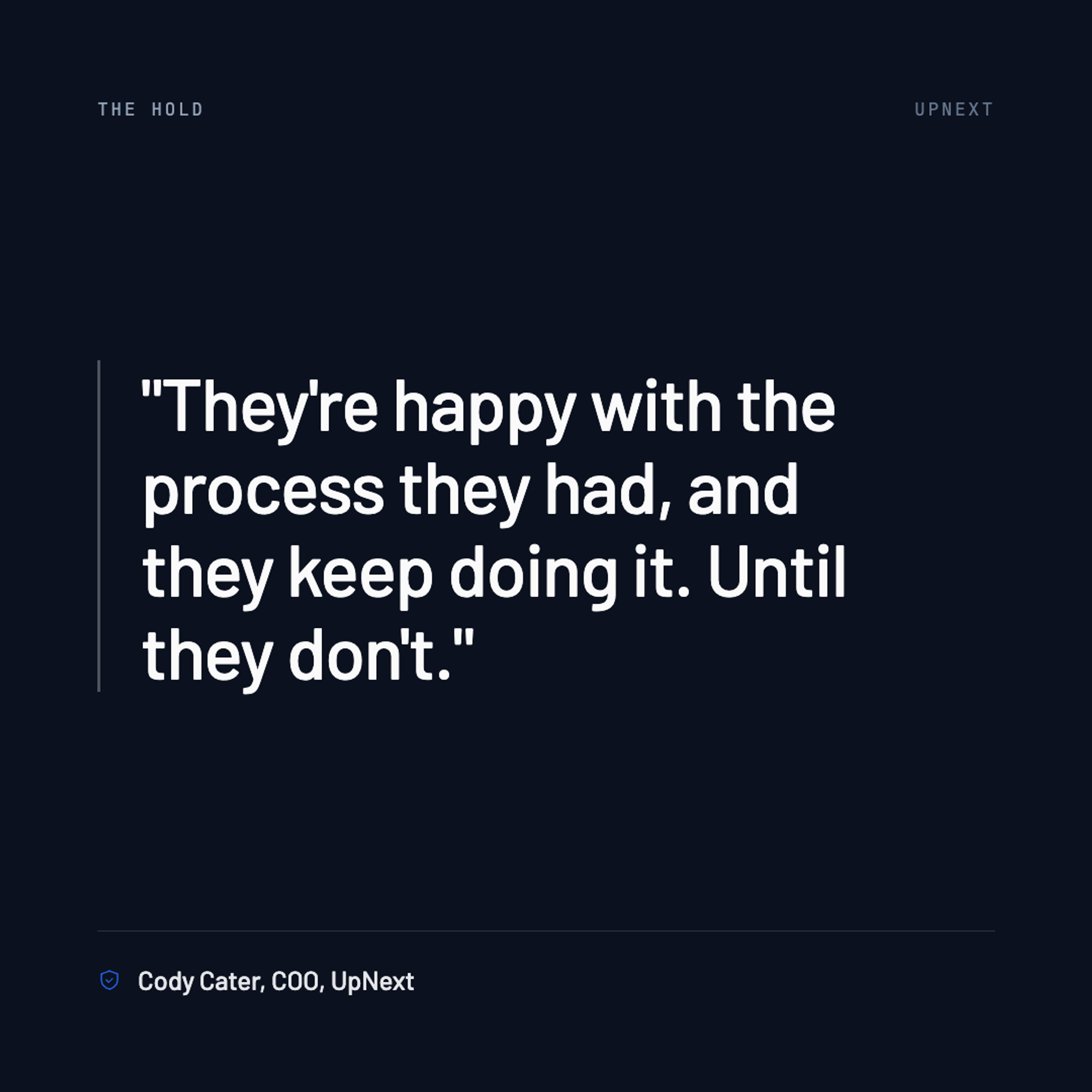
Worked example, all four moves on one case: a program coming off a flat season does not scrap its board. It keeps the baseline. It puts two weeks into a report on the conference winner's transfer class, the copycat research Cater sees staffs run, and redraws only its edge buckets from the evidence. It logs who owns each new bucket. And it writes down what result would justify the next change. That is change with a ledger.
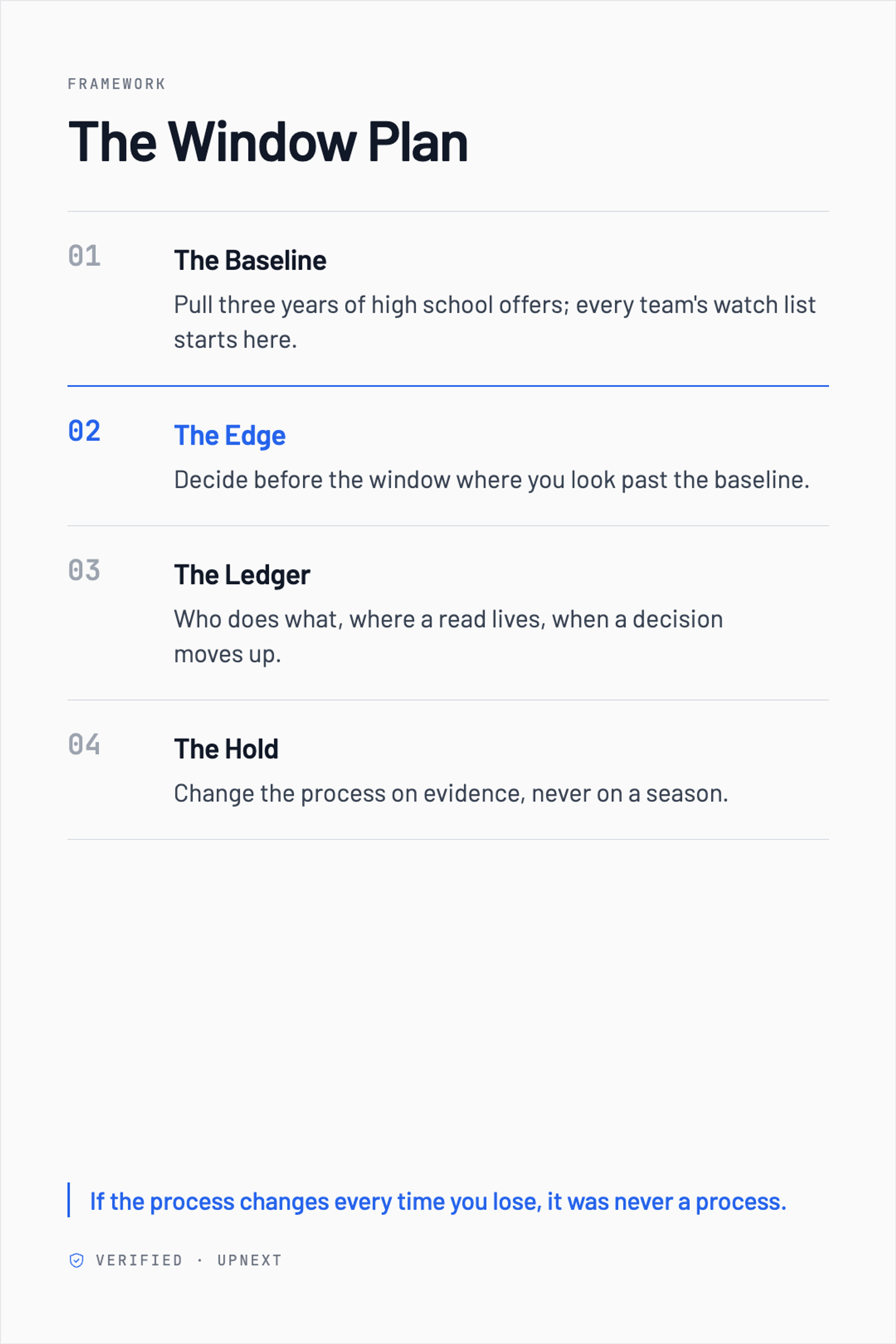
Operating rule: if the process changes every time you lose, it was never a process.
For the agency reading this
The same ladder runs on the other side of the table. "The good agencies, the bigger ones, act as a program," Cater says. "They recruit, they manage, they do outreach." A three-person shop with a baseline, an edge, and a ledger reads like a program across the table. Programs notice who reads that way.
Proof
Cater sees the same baseline and the same separators at every level, from the top of the sport down to JUCO. That vantage comes from the network: 300+ programs and 750+ coaches operate on UpNext, across 70+ conferences, alongside 140,000+ athletes and 30+ certified agencies. The window is decided early.
FAQ
When does the Window Plan start? Before camp. Programs were requesting agencies' January portal lists this July. "It just keeps getting earlier and earlier on," Cater says. September work decides January.
Does a bigger staff mean a better process? No. Cater sees good process and bad process at every division level. "It doesn't matter what division level you are," he says. A smaller staff has less manpower, which is exactly why the ledger carries more of the load.
Where should the watch list live? Wherever the whole staff sees the same read at the same time. One board the room trusts, and the habit of writing the decision down when it gets made.
Where this lands
The window rewards the program that decided in September what January would look like. Run the four moves now. January is already moving.