Tuesday, November 18, 2025
The Truth Series: The Trust Advantage
Trusted data is changing how programs read the portal. This chapter breaks down why the teams that win are not the ones who move first, but the ones who see the right signals before anyone else.

UpNext
Author
How Trusted Data Outpaces Portal Hype
The room moves before the portal does.
Live feeds roll across the monitors. Injuries, game data, soft declarations, hard declarations, agent client changes, portal status shifts, evaluation updates. Thousands of signals flowing at once.
But only a few matter.
A name blinks. Not because something happened. Because something happened that matters to this program. Something tied to their needs, their relationships, their board. The system knows which updates fit their world. The analysts do not rush or scramble. They just lean in.
Some staffs prepare for a flood. This room prepares for a pattern.
The old way was volume.
The new way is relevance.
The Old Problem Was Never Chaos. It Was Noise.
For the last few years, programs have treated the portal like a race. First to DM, first to call, first to get a name into the building. Everything became a sprint. Everything felt urgent.
Then the reality hit.
Half the information moving across the sport was incomplete or outdated. Missing injuries from last spring, agent changes from yesterday, eligibility markers buried in paperwork, soft declarations that never came to pass, hard declarations that hadn’t been properly submitted.
The speed created more confusion than clarity.
The pace magnified every blind spot.
Portal hype taught staffs to move fast.
Portal truth is teaching them to move correctly.
What Trusted Data Actually Changes
Speed is easy.
Accuracy at speed is rare.
Trusted data does not slow a program down. It removes the friction that used to masquerade as hustle. When injury data updates in real time, you do not burn a morning chasing a target who is less healthy than you thought. When agent client shifts surface instantly, you do not call the wrong person first. When soft declarations turn to hard ones, you know before your rivals refresh their timelines. When evaluation metrics update, you see it before you act on outdated assumptions.
Most staffs watch the portal like a firehose.
The best staffs watch it like a signal.
The portal is not just about who is available.
It is about who is aligned with what you need.
That shift changes everything.
Why Only a Few Signals Matter
Every feed carries thousands of data points.
Only a fraction belong to you.
A staff does not need to see every time an athlete changes agents. They need to see it when the athlete is someone they have recruited before or fits the profile they value. A staff does not need to see every injury update across the country. They need to see the injury update that changes the evaluation of a player already on their radar. A staff does not need to study every performance trendline. They need to surface the trendline that makes a fringe possibility suddenly relevant.
This is the real trust advantage.
A system that can absorb all the noise.
A system that can filter only what matters.
A system that surfaces relevance faster than rivals can recognize it.
It is no different from a stock broker scanning the market.
They see everything.
They react to almost nothing.
Only the stocks they track, own or profile into their strategies matter.
Everything else is white noise.
Information in football is the same.
New.
Known but changed.
Unexpected but relevant.
These three categories drive real movement.
Everything else is static.
The Work Does Not Start When the Portal Opens
The portal opening is not the beginning of anything.
It is the moment when months of quiet evaluation become visible.
The real work happens in the dark weeks.
The October weeks.
The bye-week weekends.
The Sunday nights after rivalry games.
The quiet days when an injury note shifts a projection.
The soft declaration that means something only if you already know the athlete’s history.
The agent-client update that matters only because of your staff’s relationships.
The performance arc that turns a long shot into a real possibility.
Most programs see these signals too late because they treat them as isolated events.
The best programs see them as connected movement.
In rooms built on trust, the board moves all year.
Not drastically.
Not chaotically.
Just consistently enough that when the portal finally opens, nothing feels new.
The patterns were already there.
The portal only confirms them.
The Human Moment
Across the sport, leaders feel the strain of a system that never sleeps.
Notre Dame head coach Marcus Freeman put it plainly.
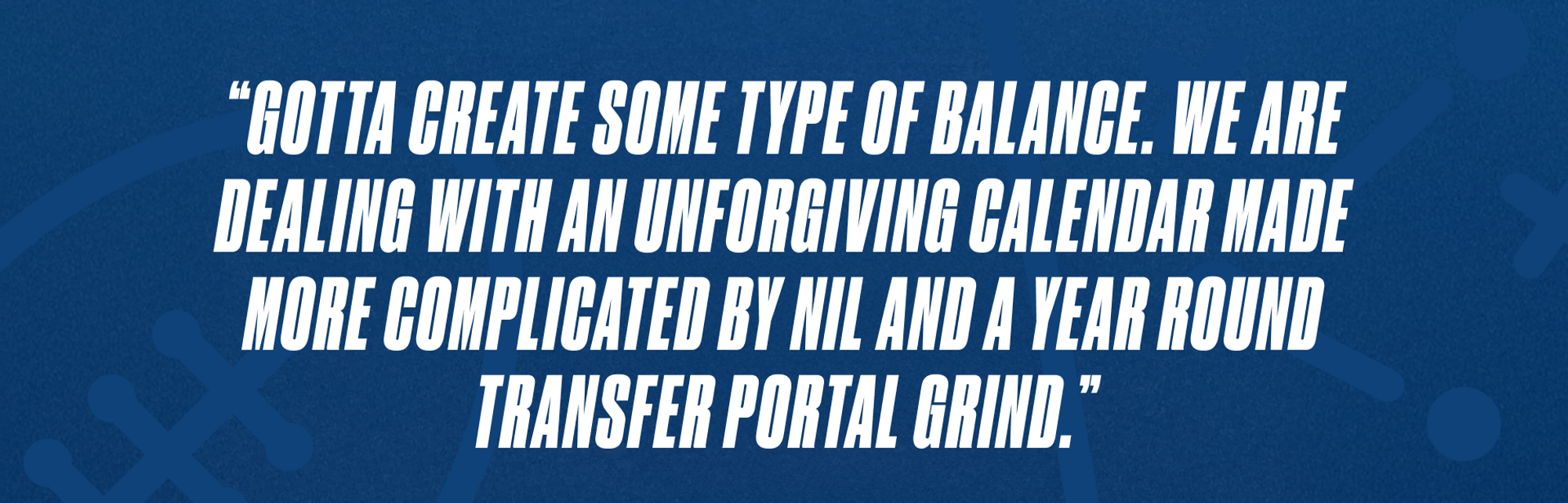
Balance is not built by slowing down.
It is built by trusting the information that moves around you.
One director of player personnel described it this way.
“When something pops on our board, it is already aligned with what we care about. I do not have to wonder why it showed up. The system knows why it matters. That is the part that changes everything.”
This is not speed.
This is confidence.
The Data Behind Relevance
Our internal survey work and conversations with personnel staffs showed the same pattern across last year’s cycle.
Programs relying on unfiltered inputs spent almost half of their early window hours cleaning up mistakes. Wrong agent, wrong status, wrong eligibility window, wrong assumptions. The volume never let them get ahead of the work.
Programs using verified, relevance filtered workflows reported that these corrections became negligible. Misroutes dropped out of the process. Backtracks disappeared. Evaluation cycles shortened because the information arriving on their boards was already aligned to their needs.
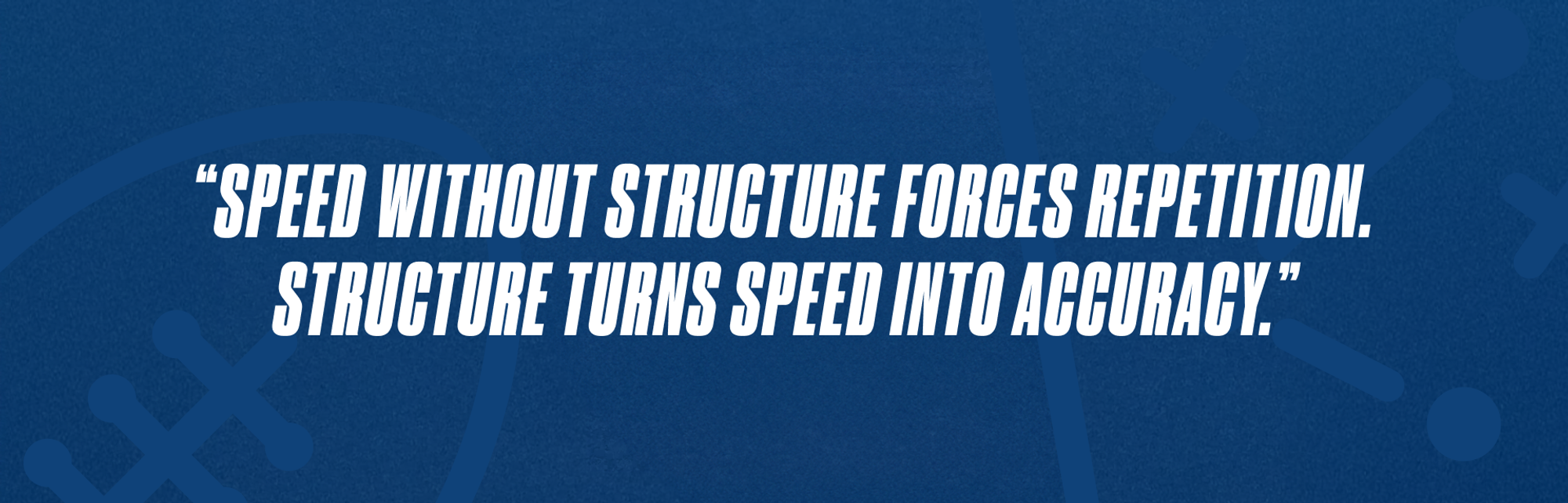
The difference was not effort. It was structure.
Speed without relevance forces repetition.
Relevance turns speed into accuracy.
The Cultural Shift
College football is learning something the markets learned long ago.
The advantage does not come from seeing more.
It comes from seeing early and seeing correctly.
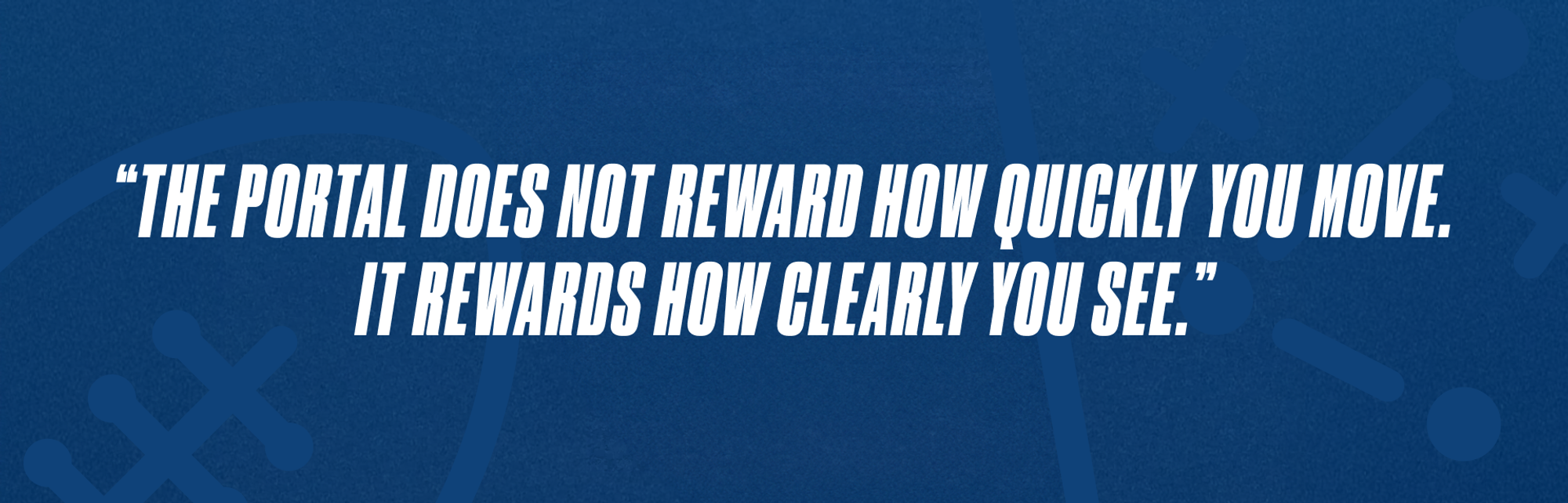
The portal punishes volume.
The portal rewards vision.
The programs that thrive in this era will not be the ones that refresh the fastest or contact the most players. They will be the ones whose information moves first because it is already aligned with what they need to know. They will be the ones who treat data as architecture, not noise. They will be the ones who see the right few signals instead of drowning in thousands.
The portal is still a storm.
The storm is not going anywhere.
But there is a difference between getting caught in it and moving through it with strategy.
Subscribe to The Trusted Source for weekly insights on how trust, data and culture are reshaping college football.