Wednesday, July 22, 2026
The Offer Read
How an agent reads an NIL number: three checks before the money moves a client.

UpNext
Author

An agent has two offers on the table for one client, and the room keeps pointing at the bigger one. Five hundred thousand from a blue blood with a crowded depth chart at the position. Two hundred fifty thousand from a program that guards its budget and a clear path to the field. The family sees the bigger check. The agent is studying the smaller one, because he knows what a year on the bench costs a client: a year of no film, and the film is what mints the next contract. Telling a family to take less money now is the hardest conversation in the job. It is also the one that separates the agents who last.
We asked Everett Levy of Goal Line Football, whose agency signs athletes early and represents them through the pros, how he values an offer before it moves a client. That full-career view is why his read weighs the second contract as heavily as the first check.
The whole read starts from one line he keeps coming back to: “It’s not the amount of money, but it’s the story that money tells you.”
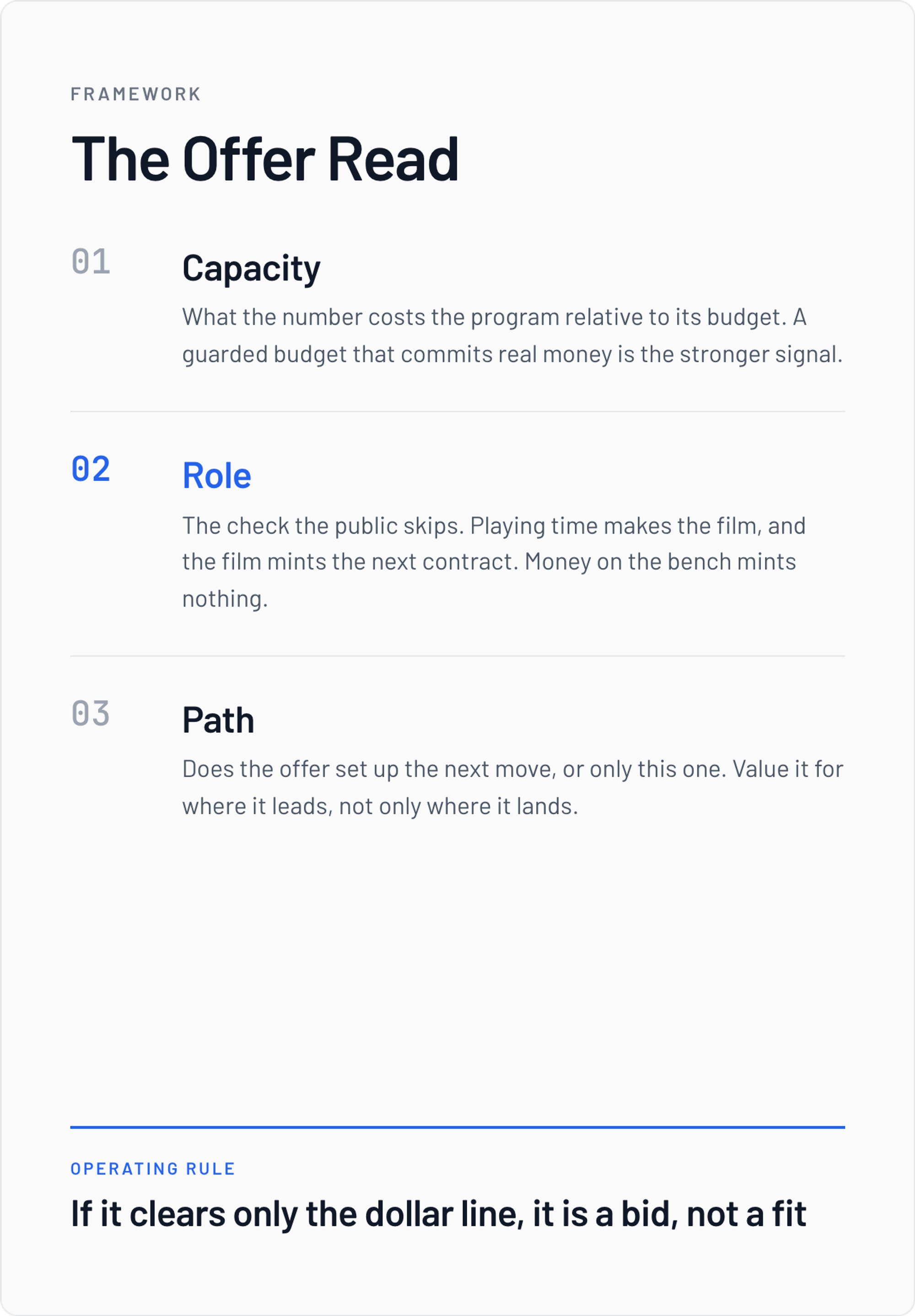
Capacity
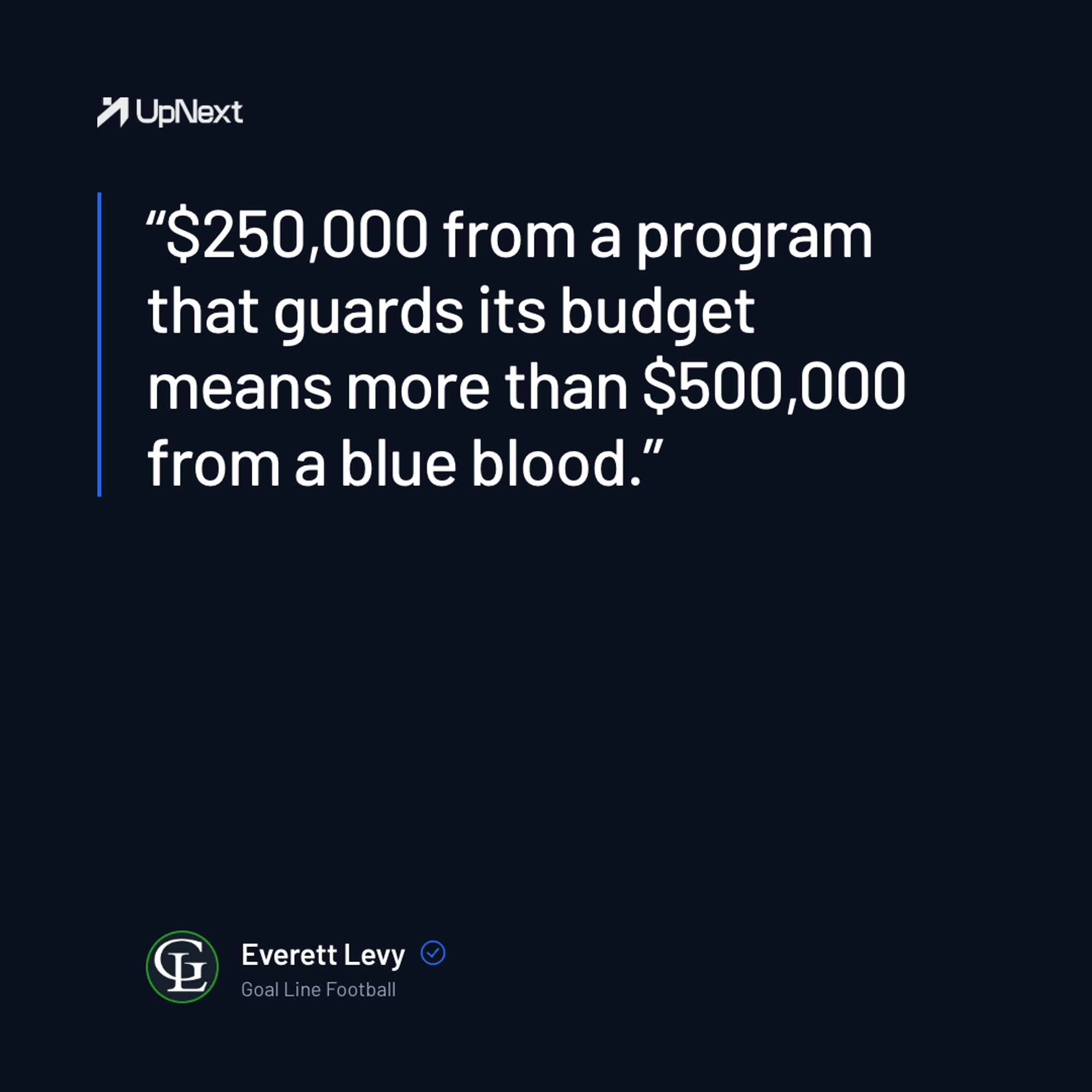
What does the number cost the program relative to its budget? Levy makes it concrete: “$250,000 from a program that guards its budget means a whole lot more than $500,000 from a blue blood. The blue blood can [afford to lose that bet]. The one guarding its money, if they’re paying you that, then you better be there.” A guarded budget that commits real money is telling you how much it will play the athlete. Same figure, two programs, two different signals. Read the number against capacity, never in isolation.
Role
This is the check the public conversation skips. The noise is all NIL and rev-share dollars, the number on the offer. The operators are watching something that does not exist yet: the film. Playing time is the only thing that makes it, and the film is what mints the next contract. Money on the bench mints nothing. Levy walks a recruit through it directly: “Do you want to end up in that same position a year from now, or go to a G5 school where you’re going to be the star, go play, and your next contract you hit the portal again and make a ton of money? You also position yourself to get filmed for the NFL.” Picture a corner with two offers: a blue blood where he is fourth on the depth chart, and a Group of Five program building its defense around him. The bigger brand does not put him on NFL tape. Snaps do.
An agent selling a client’s future is selling tape that has not been shot yet, and only a real role gets it made.
Path
Does the offer set up the next move, or only this one? College football turns over fast, with staffs and depth charts changing between seasons, so the read is never just this year. A recruit who commits to a coach can be in a new situation one hiring cycle later, and the offer that looked best in isolation may not be the one that positions the second contract. Value the offer for where it leads, not only for where it lands.
Put the three together
Go back to the two offers. Five hundred thousand from a program that will not miss it, with a crowded room at the position. Two hundred fifty from a program that guards its budget, a clear path to start, and a coach who is likely to stay. Capacity favors the second. Role favors the second. Path favors the second. The bigger number is the worse offer, and the read is what shows it.
The operating rule: if an offer clears only the dollar line, it is a bid, not a fit.
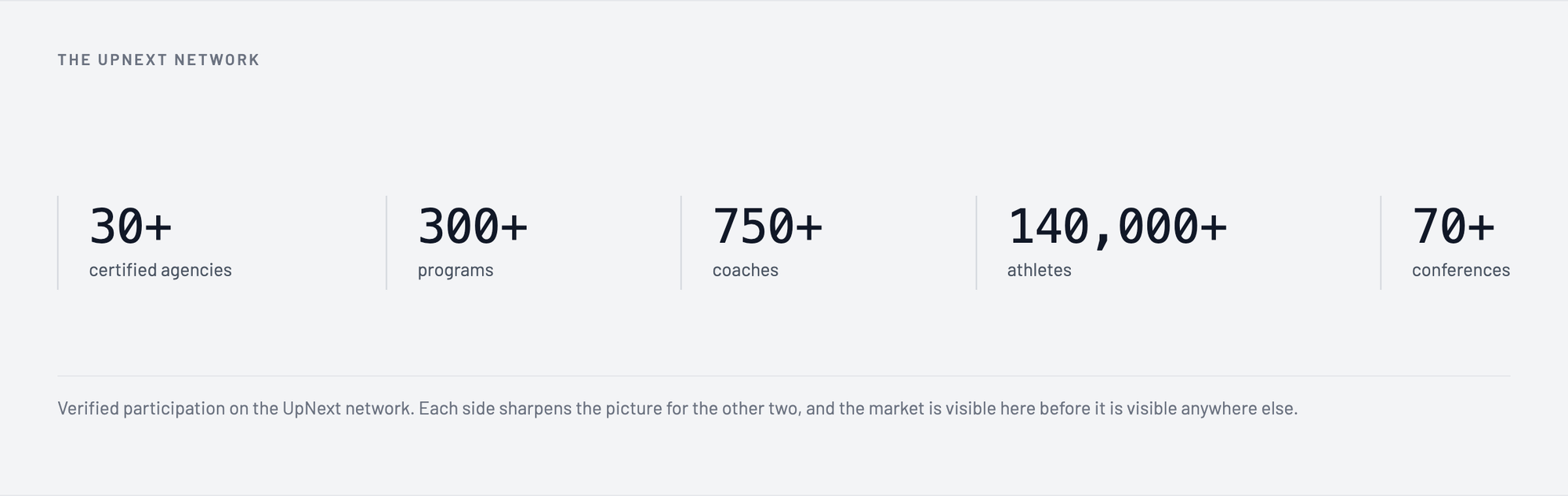
This is where the network becomes the comp set. 300+ programs, 750+ coaches, 140,000+ athletes, and deal signals across 70+ conferences let an agent price an offer against the market instead of against a hunch. Filter to comparable athletes and the going rate for a role stops being a guess. 30+ certified agencies operate here.
FAQ
Is a bigger number ever simply better? When capacity, role, and path all point the same way, yes. The read exists for when they do not, which is most of the time.
How do you compare an offer without market data? You filter the network to comparable athletes and see what the market actually pays for that role, that production, that tier.
Does this slow a deal down in a compressed window? No. The three checks take minutes, and they prevent the wrong fit that costs a season.
The market rewards the read. The agents who last read all three checks while everyone else is staring at the dollar sign.