Wednesday, July 15, 2026
The Agent Layer
Representation is an information problem and a trust problem, and both are more legible than they look.

UpNext
Author

College athletics is a market now. Money moves, rosters move, and the deal you wanted can be gone in a day because you could not see who to call. A layer of representation sits between the athlete and the program, and from the outside it reads as a black box. Up close it runs on a small set of repeatable principles, and it clears faster when the network can see it.
We sat down with agent Everett Levy of Goal Line Football, a top football agency on the UpNext network. Goal Line came up through the NFL, first representing players, then coaches, and brought on a former NFL team executive to run its player side. That lineage is the reason Levy’s read carries weight: the firm signs athletes early, in high school or already in college, and represents them all the way through the pro career. That means Levy plays a long game, measured against a second pro contract four or five years out. “If I could get my foot in the door with a top 50 player in the country and do a good job for him, I’ll have an opportunity to have a first-round pick in four or five years.” This is a relationship business measured in years.
The day-to-day is messier than that sounds. Levy described one client in real time: “He’s getting recruited by all these different schools and they’re talking to him every day, and I’ve only heard from two schools about him.” The person who holds the relationship is often the last one in the conversation. The market cannot see who that person is.
Relationship, not transaction
Two models operate side by side. One picks off transfers and resets every cycle. The other recruits early and paths the career toward the second pro contract. Goal Line runs the second model, and Levy counsels clients to think past the biggest check: “By taking less money now, you might make a lot more money down the road, just by putting yourself in a better situation.” Trust compounds because the same people sit across the table next year, and Levy will tell a coach plainly when a client is not the right fit, because the honest read is what gets the next call taken.
There’s no map
“You can plan to mind map,” Levy says, “but you have to take that with a grain of salt, because there’s no map. Everything changes every three months in college football. You can plan on predicting, but you can’t hold yourself to it, because things are going to change.” Staffs move, budgets reset, and a fit that is real in December can be gone by spring. Good programs work the same way, treating their board as a live document rather than a decision they made once.
A trust problem
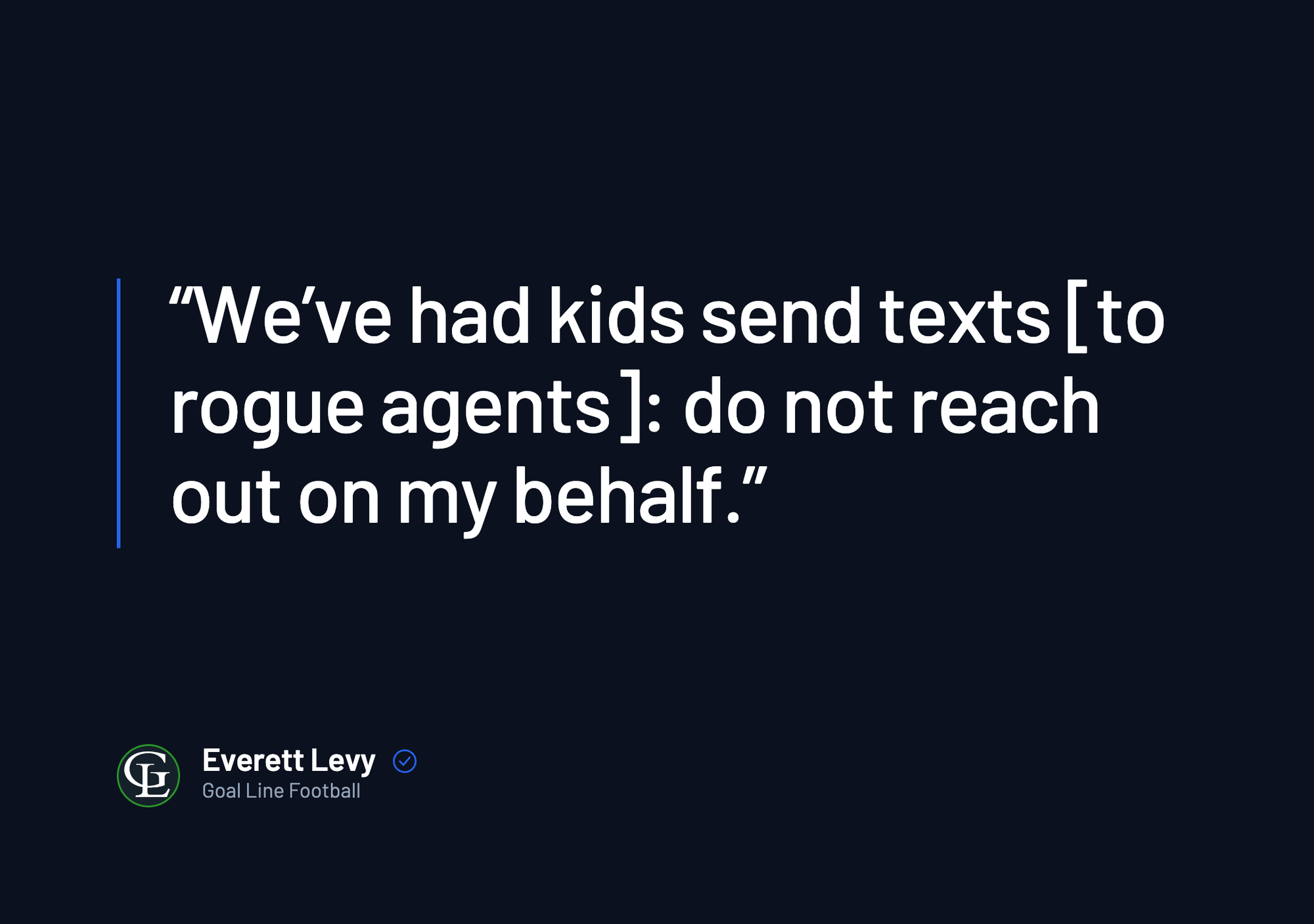
The gap comes down to visibility: the real agent is invisible and the impostors are loud. Levy has a high school client being recruited daily by a stack of programs, and he has heard from two of them. Meanwhile the noise comes from people who represent no one. “There’s agents out there who are calling schools telling them, look, I represent this player, even though they don’t, just to get their foot in the door.” It sets back negotiations, and it poisons the well for the agents who operate honestly, because a GM fielding several calls about one athlete, only one of them real, learns to distrust all of them. Athletes feel it too. The cost is concrete: an agent can spend the bulk of a client’s time managing deal logistics instead of the decision that matters, and a recruiting window can close before the right people ever spoke.
The distrust is corrosive precisely because the honest signal and the dishonest one arrive through the same channel, in the same words. When representation is not legible, the market defaults to noise, and the athletes closest to it push back the hardest.
Make who’s real easy to see
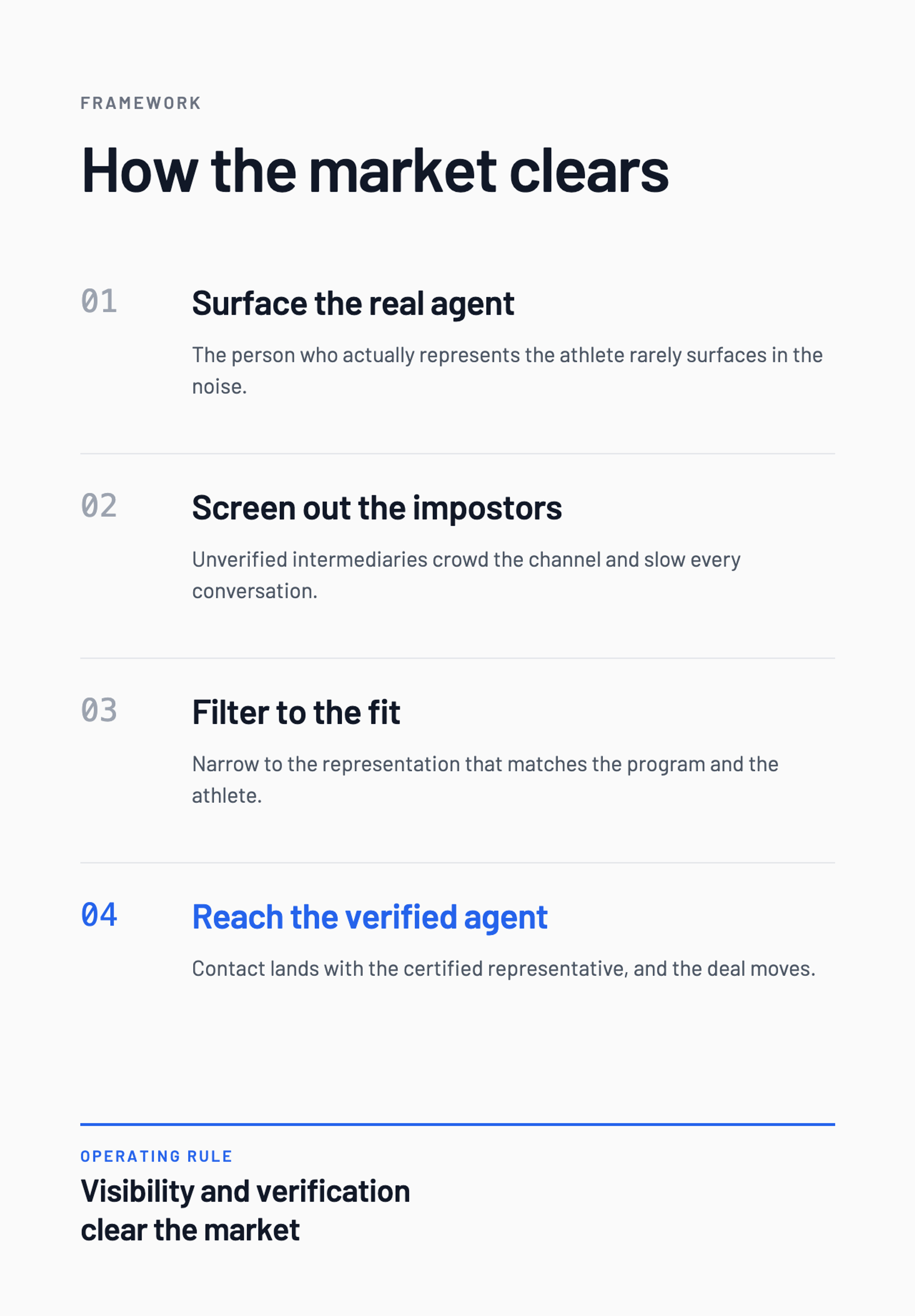
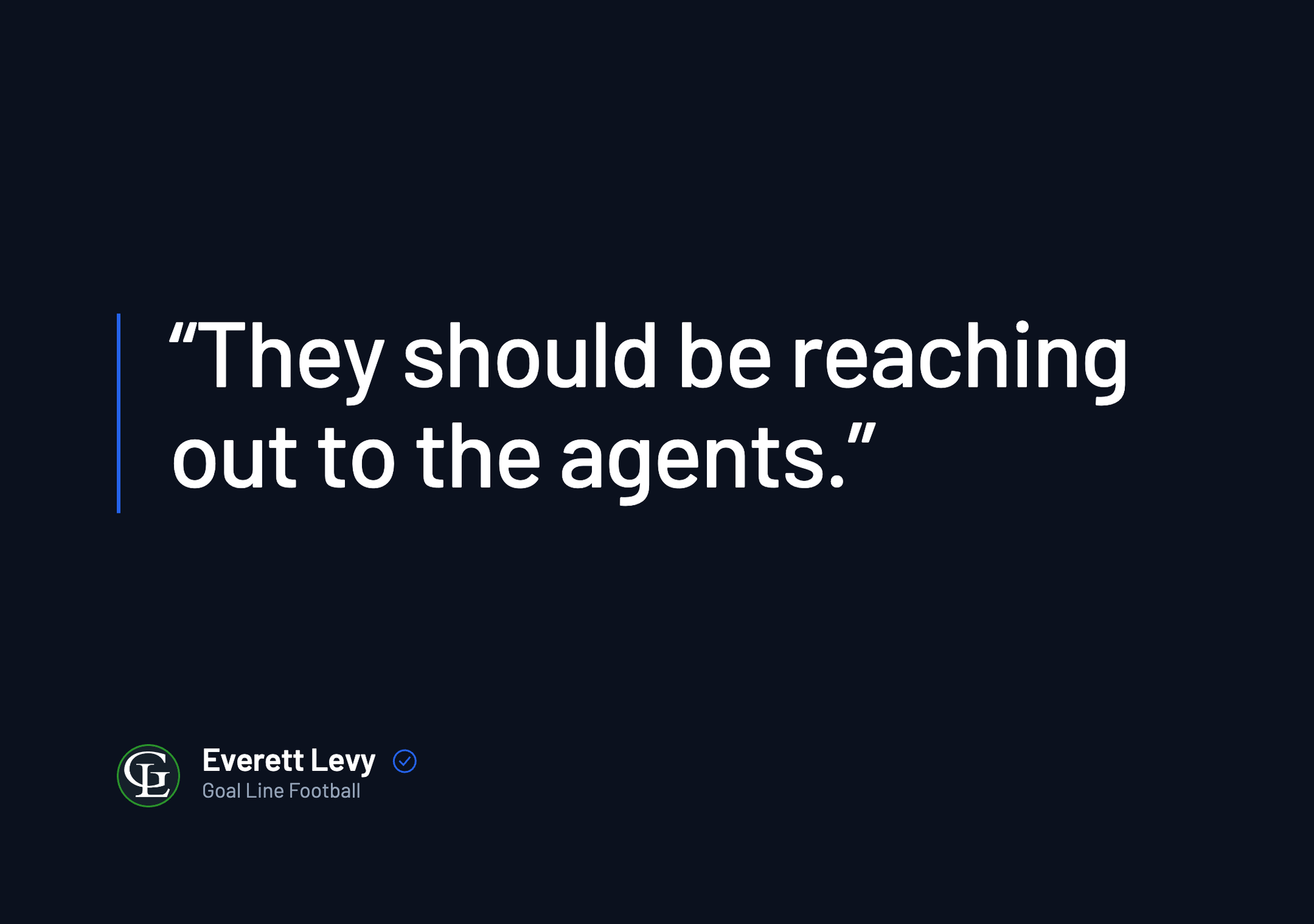
Levy’s read is that the line should open earlier and start in the right place. “It would be nice to open the line of communication a lot earlier.” He pointed to one program that fought hard for a client: “They really wanted him, and that tells me something.” The intent was there the whole time. It just surfaced late, and often to the wrong inbox. He described the move he wants, unprompted: “Filter search and be like, we need DBs who are over 6 foot and have seven pass deflections, graded highly over the past two seasons, played this amount of snaps. Click on that, filter that, and then reach out to these guys’ agent, watch their film.” That is the whole fix in one motion. On the network, every agency is vetted and certified before it earns a verified profile, and that profile ties an agent to the athletes they actually represent, so a program filters to the fit, reaches the person who really holds the relationship, and the impostor has nowhere to stand.
Why it compounds
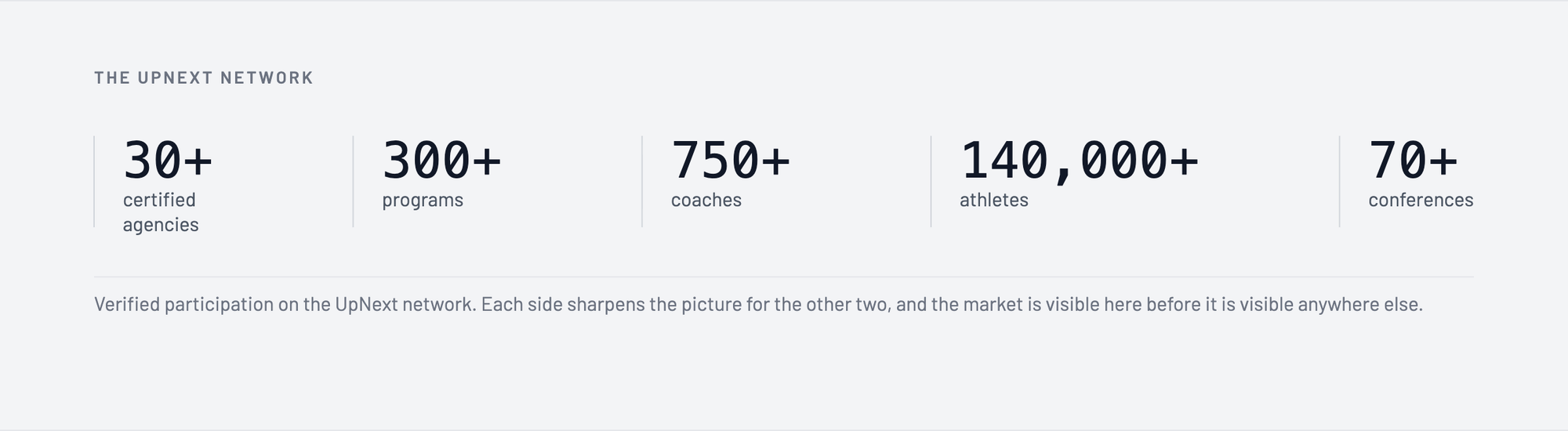
Each side of the network makes it more valuable to the other two. Programs see verified representation, agents see real demand, athletes see where the market is moving, and every new participant sharpens the picture for the rest. That is the flywheel, and it is already turning. Once programs, agents, and athletes all operate on one verified layer, leaving means going blind again: the network is the moat. The market is visible here before it is visible anywhere else.
FAQ
Why start with the agent? An athlete is managing fifty conversations at once, and in the portal has days to decide. The relationship that holds the deal sits with the agent, and everything moves faster when the first conversation starts there.
How does a program find the right fit without working every agency by hand? It filters the network to the profile it needs and reaches the verified agent for those athletes, instead of guessing which list is current.
What makes representation trustworthy here? Verification. When anyone can call a program claiming to represent a player, the honest agent gets lost in the noise and every agent inherits the distrust. Every agency on the network is vetted and certified before it earns a verified profile, and that profile ties the agent to the athletes they actually represent. That is what makes the real relationship legible, so a program knows the conversation is starting in the right place and the impostor has nowhere to stand.
The market clears where it is visible and verified. The programs that win the next window are the ones that filter to the fit, reach the verified agent, and start the conversation before the deal is gone.